Introduction
Healthcare professionals face significant challenges when distinguishing between atrial fibrillation (AFib) and ventricular fibrillation (VFib) on an ECG, which can have serious implications for patient care. Both conditions present unique difficulties, as they share overlapping symptoms and ECG presentations that can lead to misdiagnosis. Misdiagnosis can result in delayed treatment, significantly impacting patient health and recovery.
Let’s explore the unique ECG characteristics of AFib and VFib and how they impact diagnosis and treatment. Advanced technologies like the MaxYield™ platform can enhance diagnostic accuracy, providing healthcare providers with the tools they need to navigate these complexities effectively. Navigating these complexities is essential for ensuring timely interventions that can save lives.
Define Atrial Fibrillation and Ventricular Fibrillation
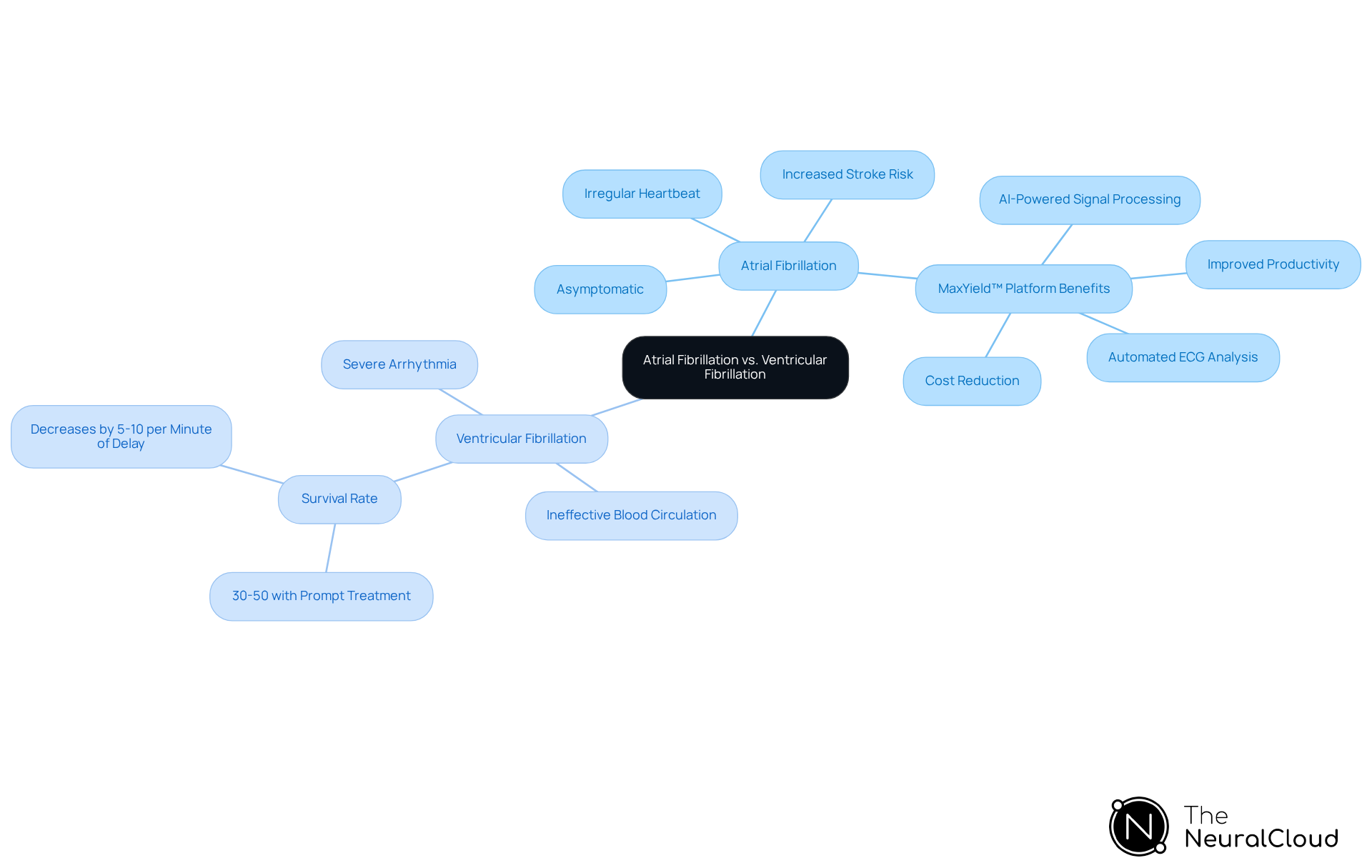
Atrial fibrillation presents significant challenges for healthcare professionals due to its irregular heartbeat and associated risks. This condition causes chaotic electrical signals, leading to ineffective atrial contractions and a significantly increased risk of stroke. Individuals with atrial fibrillation are roughly 4.6 times more likely to experience ventricular fibrillation compared to those without the condition. Additionally, AFib can remain asymptomatic for extended periods, making effective monitoring essential for healthcare professionals.
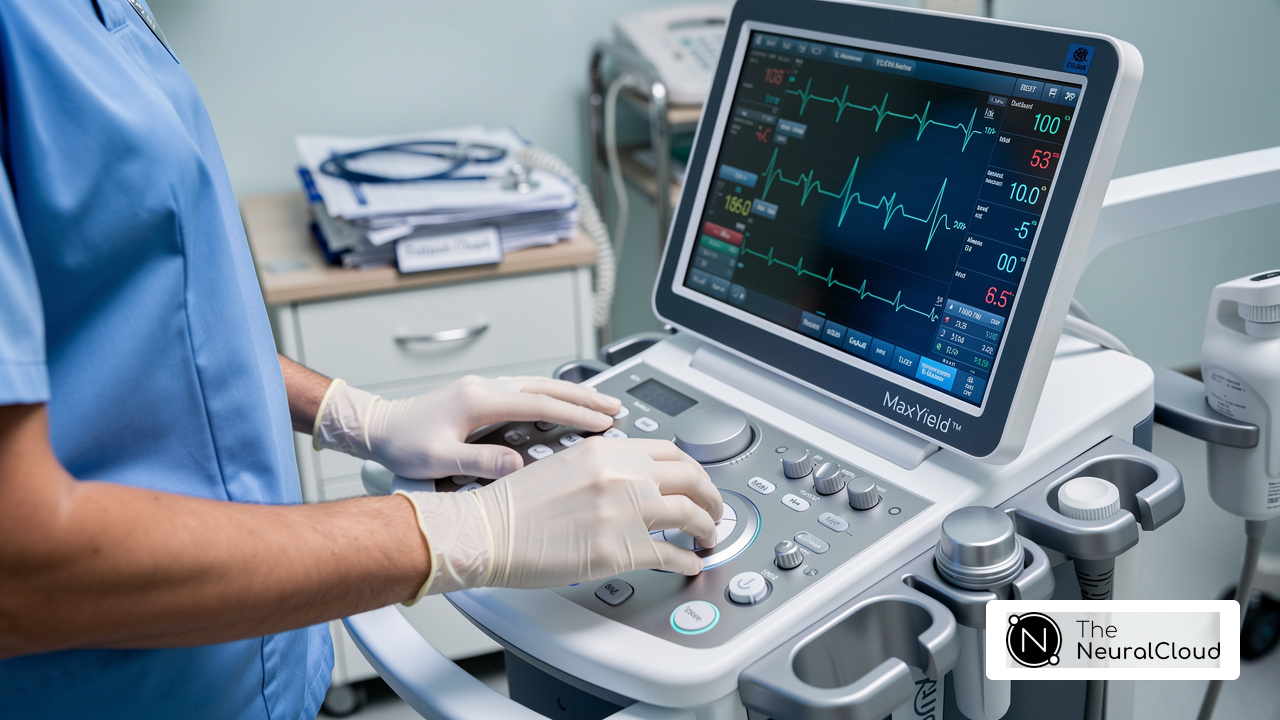
The MaxYield™ platform from Neural Cloud Solutions enhances ECG analysis efficiency through automated labeling and data extraction, which reduces operational costs and improves productivity. It employs AI-powered algorithms to ensure accurate signal processing, addressing challenges such as physiological variability and signal artifacts.
In contrast, ventricular fibrillation is a severe arrhythmia occurring in the ventricles, the heart's lower chambers. During ventricular fibrillation, the ventricles tremble ineffectively instead of circulating blood, resulting in a halt of blood flow that requires prompt medical attention. With prompt treatment, the survival rate for individuals experiencing ventricular fibrillation ranges from 30% to 50%. This underscores the urgency of recognizing and addressing this condition swiftly.
Understanding the difference between atrial fibrillation and ventricular fibrillation on ECG is crucial for effective diagnosis and treatment in clinical settings. The MaxYield™ platform empowers healthcare professionals to enhance patient outcomes through improved ECG analysis and timely interventions.
Differentiate AFib and VFib on ECG Readings
Differentiating the difference between atrial fibrillation and ventricular fibrillation on ECG can be challenging for healthcare providers due to their distinct yet complex characteristics. Atrial fibrillation (AFib) is marked by the absence of distinct P waves and an irregularly irregular ventricular response, often resulting in a rapid heart rate. The baseline often shows wavy patterns from fibrillatory waves, which indicate disorganized electrical activity in the atria. In contrast, ventricular fibrillation is characterized by chaotic, erratic waveforms that lack identifiable QRS complexes, P waves, or T waves. The ECG during ventricular fibrillation displays rapid variations in amplitude, reflecting significant disarray in the heart's electrical signals. Recognizing the difference between atrial fibrillation and ventricular fibrillation on ECG is crucial for healthcare providers, as timely identification can lead to effective interventions. For instance, individuals with atrial fibrillation face a fivefold increased risk of stroke compared to those without the condition. Meanwhile, ventricular fibrillation represents a life-threatening emergency that necessitates urgent defibrillation to restore normal heart function.
Utilizing MaxYield™, Neural Cloud Solutions' automated ECG analysis platform, healthcare providers can enhance their ability to identify these arrhythmias quickly and accurately. MaxYield™ effectively maps ECG signals through noise. It isolates key features in every heartbeat, aiding in the recognition of the distinct characteristics of both atrial fibrillation and ventricular fibrillation. Comprehending these ECG traits, along with signs like palpitations and ongoing fatigue linked to atrial fibrillation, is essential for effective management and treatment of individuals experiencing these arrhythmias. Understanding the difference between atrial fibrillation and ventricular fibrillation on ECG not only aids in timely intervention but can also significantly impact patient outcomes in critical situations.

Explore Clinical Implications and Treatment Strategies for AFib and VFib
Atrial fibrillation (AFib) presents significant challenges in cardiovascular health, necessitating effective management to prevent serious complications. Current treatment strategies focus on anticoagulation therapy to reduce stroke risk. They also include rate control medications and rhythm control methods like cardioversion or catheter ablation. Recent guidelines support early intervention, emphasizing that timely treatment can significantly enhance outcomes and quality of life. For instance, patients undergoing catheter ablation have shown a 23% lower risk of stroke and a 32% reduction in cardiovascular disease mortality compared to those focusing solely on heart rate control.
In contrast, the difference between atrial fibrillation and ventricular fibrillation on ECG is significant, as ventricular fibrillation is a critical emergency that requires prompt defibrillation to restore normal heart rhythm. Long-term management of ventricular fibrillation often involves using implantable cardioverter-defibrillators (ICDs) to prevent future episodes and address underlying causes. The incorporation of advanced monitoring technologies, such as wearable devices, is becoming increasingly crucial in managing the difference between atrial fibrillation and ventricular fibrillation on ECG. These technologies facilitate real-time data collection and prompt interventions.
Neural Cloud Solutions' MaxYield™ service enhances this process by rapidly labeling P, QRS, and T Wave onsets and offsets. It provides beat-by-beat tabulation in CSV format for easy integration into current workflows. This innovative method allows health tech creators to analyze more data in less time, revealing actionable insights that can improve care management strategies for understanding the difference between atrial fibrillation and ventricular fibrillation on ECG. Dr. Yasser Rodriguez emphasizes that timely treatment and effective methods can save lives for those with atrial fibrillation.
Real-world cases illustrate how effective these strategies can be. For example, an individual who underwent pulse field ablation for AFib reported being symptom-free and active one year post-procedure, showcasing the potential for improved quality of life through modern treatment options. PFA is recognized as a quicker and more secure option compared to conventional methods, further enhancing outcomes for individuals. Understanding these advancements is crucial for healthcare professionals aiming to improve patient outcomes in the face of AFib and ventricular fibrillation.

Utilize Advanced ECG Analysis Technologies for Improved Diagnosis
Despite advancements in ECG analysis, challenges remain in ensuring accurate interpretations. Advanced ECG analysis technologies, exemplified by the MaxYield™ platform from Neural Cloud Solutions, leverage sophisticated AI algorithms to automate the interpretation of ECG signals. This significantly enhances both clarity and accuracy. MaxYield™ can process over 200,000 heartbeats in under five minutes. It swiftly identifies critical features, including P-waves, QRS complexes, and T-wave intervals, with remarkable precision.
Its device-agnostic nature allows it to capture ECG recordings from any 1-lead or 3-lead device, ensuring seamless integration into various clinical workflows. By reducing human error and streamlining the analysis process, MaxYield™ helps healthcare professionals focus on important decisions. The integration of these technologies into clinical practice improves diagnostic yield and enhances patient management. This makes it a pivotal advancement in cardiology.
As the adoption of AI-driven solutions continues to rise, the potential for improved outcomes in diagnosing conditions like atrial and ventricular fibrillation becomes increasingly evident. However, challenges remain, such as the risk of false positives in AI-powered AF detection. This underscores the importance of using these tools as decision support rather than definitive diagnostics. Additionally, the automated PQRST labeling feature further enhances the clarity of ECG analysis, providing healthcare professionals with detailed insights into cardiac events.

Conclusion
Misidentifying atrial fibrillation (AFib) and ventricular fibrillation (VFib) on ECG can lead to critical treatment delays. These two types of fibrillation, while both significant, present unique challenges for healthcare professionals. Recognizing their differences is vital for effective patient management and timely intervention, as it can significantly impact treatment strategies and patient outcomes.
Key points highlighted throughout the article include:
- The chaotic electrical activity observed in AFib, which increases the risk of stroke.
- The life-threatening nature of VFib that requires immediate defibrillation.
The MaxYield™ platform enhances the identification of these conditions through automated ECG analysis, ultimately leading to better patient care. Additionally, treatment strategies for both AFib and VFib were discussed, showcasing the importance of timely interventions and the role of innovative monitoring solutions.
Healthcare providers must stay informed about the latest advancements in ECG analysis and treatment approaches. Embracing technologies that enhance diagnostic accuracy and understanding the clinical implications of AFib and VFib can improve patient management and save lives. Recognizing and addressing these arrhythmias is crucial for effective patient care.
Frequently Asked Questions
What is atrial fibrillation (AFib)?
Atrial fibrillation is a condition characterized by an irregular heartbeat caused by chaotic electrical signals, leading to ineffective atrial contractions and an increased risk of stroke.
How does atrial fibrillation affect the risk of ventricular fibrillation?
Individuals with atrial fibrillation are approximately 4.6 times more likely to experience ventricular fibrillation compared to those without the condition.
Can atrial fibrillation be asymptomatic?
Yes, atrial fibrillation can remain asymptomatic for extended periods, making effective monitoring essential for healthcare professionals.
What is ventricular fibrillation?
Ventricular fibrillation is a severe arrhythmia that occurs in the heart's lower chambers (ventricles), causing them to tremble ineffectively instead of circulating blood, which halts blood flow and requires immediate medical attention.
What is the survival rate for individuals experiencing ventricular fibrillation with prompt treatment?
The survival rate for individuals experiencing ventricular fibrillation, with prompt treatment, ranges from 30% to 50%.
Why is it important to understand the differences between atrial fibrillation and ventricular fibrillation?
Understanding the differences is crucial for effective diagnosis and treatment in clinical settings, as it informs the necessary interventions for each condition.
How does the MaxYield™ platform assist healthcare professionals in managing these conditions?
The MaxYield™ platform enhances ECG analysis efficiency through automated labeling and data extraction, improving productivity and reducing operational costs while employing AI-powered algorithms for accurate signal processing.
List of Sources
- Define Atrial Fibrillation and Ventricular Fibrillation
- bbc.com (https://bbc.com/news/articles/c9wnky140dko)
- newsroom.heart.org (https://newsroom.heart.org/news/people-with-afib-and-diabetes-were-less-likely-to-notice-irregular-heartbeat)
- medicalnewstoday.com (https://medicalnewstoday.com/articles/atrial-fibrillation-vs-ventricular-fibrillation)
- webmd.com (https://webmd.com/heart-disease/atrial-fibrillation/news-features)
- New research finds 62% of AFib patients were unaware of the condition before diagnosis (https://newsroom.heart.org/news/new-research-finds-62-of-afib-patients-were-unaware-of-the-condition-before-diagnosis)
- Differentiate AFib and VFib on ECG Readings
- Screening-detected atrial fibrillation linked to threefold heart failure risk (https://news-medical.net/news/20260413/Screening-detected-atrial-fibrillation-linked-to-threefold-heart-failure-risk.aspx)
- primerevivalresearch.com (https://primerevivalresearch.com/blogs/ventricular-fibrillation-vs-atrial-fibrillation-or-vfib-vs-afib)
- cpraedcourse.com (https://cpraedcourse.com/blog/afib-vs-vfib)
- Facts and Statistics About Atrial Fibrillation (https://healthline.com/health/living-with-atrial-fibrillation/facts-statistics-infographic)
- jacc.org (https://jacc.org/doi/10.1016/j.jacep.2024.08.010)
- Explore Clinical Implications and Treatment Strategies for AFib and VFib
- northwell.edu (https://northwell.edu/news/insights/afib-treatment-what-heart-doctors-need-you-to-know)
- nortonhealthcareprovider.com (https://nortonhealthcareprovider.com/news/updates-in-afib-cme)
- northside.com (https://northside.com/about/news-center/article-details/a-new-option-for-treating-atrial-fibrillation)
- New Developments in Atrial Fibrillation (https://uscjournal.com/articles/new-developments-atrial-fibrillation?language_content_entity=en)
- acc.org (https://acc.org/latest-in-cardiology/articles/2025/11/03/16/19/sat-315pm-afib-aha-2025)
- Utilize Advanced ECG Analysis Technologies for Improved Diagnosis
- FDA clears 12-lead, cable-free home ECG monitoring system (https://cardiovascularbusiness.com/topics/cardiac-imaging/electrocardiography-ecg/fda-clears-12-lead-cable-free-home-ecg-monitoring-system)
- ahajournals.org (https://ahajournals.org/doi/10.1161/CIRCHEARTFAILURE.125.013927)
- AI-Powered ECG Analysis Offers Promising Path for Early Detection of Chronic Obstructive Pulmonary Disease, Say Mount Sinai Researchers (https://mountsinai.org/about/newsroom/2026/ai-powered-ecg-analysis-offers-promising-path-for-early-detection-of-chronic-obstructive-pulmonary-disease-say-mount-sinai-researchers)
- AI Screening for Atrial Fibrillation Shows 90% Accuracy at HRS (https://mddionline.com/cardiovascular/ai-powered-atrial-fibrillation-detection-how-machine-learning-is-transforming-cardiac-care-through-ecg-analysis)