Introduction
Ventricular fibrillation (VF) poses a significant challenge in cardiac health, as it disrupts the heart's electrical activity and leads to a rapid decline in effective blood circulation. For developers in the ECG technology space, understanding the nuances of VF detection is crucial, as survival rates decrease significantly with each passing minute without intervention. Innovative ECG solutions can be harnessed to improve detection and response times, ultimately saving lives in these critical situations.
Define Ventricular Fibrillation and Its Clinical Importance
Ventricular fibrillation on ECG poses a serious threat to cardiac health, marked by chaotic electrical activity that disrupts normal heart function. In VF, pulse rates can soar above 400 beats per minute, severely reducing cardiac output and risking sudden cardiac arrest without immediate intervention. Recent studies show that detecting VF quickly can greatly improve survival rates. In fact, survival decreases by 10% for every minute resuscitation is delayed.
For ECG technology developers, understanding the importance of detecting ventricular fibrillation on ECG is vital, as accurate analysis can significantly influence patient outcomes in emergencies. Case studies show that advanced detection methods improve clinical outcomes, underscoring the need for innovative ECG solutions that focus on accurately identifying events of ventricular fibrillation on ECG.

Identify ECG Characteristics of Ventricular Fibrillation
Diagnosing ventricular fibrillation on ECG presents significant challenges due to its chaotic characteristics, which require immediate attention from healthcare professionals. Key features include:
- Chaotic Waveforms: VF is characterized by irregular, rapid deflections on the ECG, with no identifiable P waves, QRS complexes, or T waves. This chaotic pattern shows that the heart's electrical activity is disorganized.
- Rate: The ventricular rate during VF can range from 150 to 600 beats per minute, reflecting the severity of the arrhythmia and the urgency for medical intervention.
- Amplitude Variability: The amplitude of the deflections can vary significantly, with some waves appearing coarse (measuring 3 millimeters or more) and others fine (less than 3 millimeters). This distinction is critical, as coarse VF generally has a better prognosis than fine VF, which may indicate a worsening condition.
- Absence of Cardiac Output: Due to the lack of organized contraction, VF results in virtually no effective cardiac output, making it imperative for clinicians to recognize this condition during emergencies.
By understanding these ECG characteristics, developers can create tools that enhance real-time detection of ventricular fibrillation on ECG, ultimately saving lives.

Explore Causes and Risk Factors of Ventricular Fibrillation
Ventricular fibrillation (VF) poses significant challenges in clinical settings due to its diverse causes and risk factors. These include:
- Coronary Artery Disease (CAD): The most prevalent cause of VF, CAD reduces blood flow to the heart muscle, leading to ischemia and significantly increasing the risk of arrhythmias.
- Myocardial Infarction: Cardiac events disrupt the heart's electrical system, often resulting in VF. Studies indicate that VF occurs in approximately 3-12% of individuals experiencing a heart attack, highlighting its critical nature.
- Electrolyte Imbalances: Abnormal levels of potassium, magnesium, or calcium can destabilize cardiac electrical activity, making patients more susceptible to VF. Severe imbalances in these electrolytes are acknowledged as important contributing factors.
- Cardiomyopathy: Conditions that impact the heart muscle, such as hypertrophic cardiomyopathy, can increase the likelihood of VF, especially in younger individuals who may not show conventional contributing factors.
- Genetic Factors: Certain inherited conditions predispose individuals to arrhythmias, including VF. Understanding these genetic influences is essential for developing targeted interventions.
- Drug Use: Stimulants, particularly cocaine and methamphetamine, can provoke VF in susceptible individuals. Understanding these dangers is essential for prevention strategies.
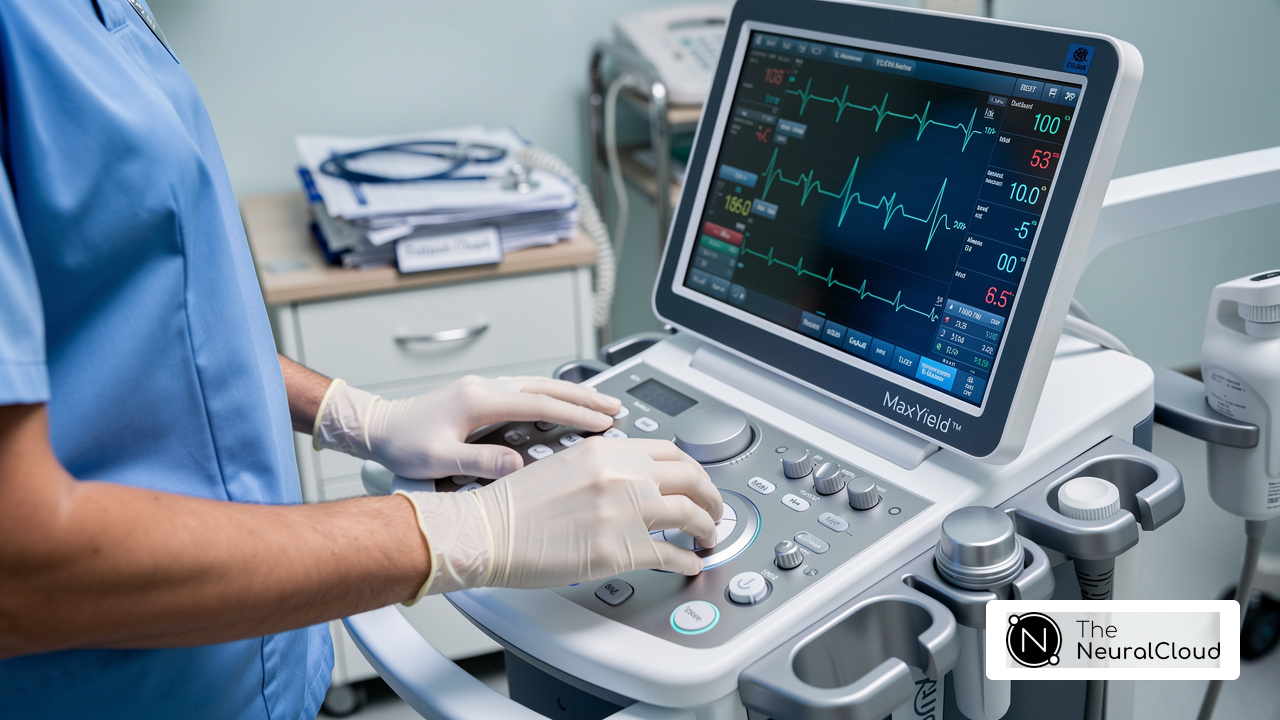
Recognizing these risk factors is vital for healthcare professionals aiming to implement effective prevention and intervention strategies. For example, ECG technologies such as Neural Cloud Solutions' MaxYield™ can play a crucial role in identifying patients susceptible to ventricular fibrillation on ECG by analyzing rhythms and detecting irregularities, even in recordings that have high levels of noise and artifact. By integrating advanced algorithms and real-time monitoring, MaxYield™ significantly improves the diagnostic yield and enhances the identification of risk factors for ventricular fibrillation on ECG. Moreover, the use of automated external defibrillators (AEDs) is essential in managing VF, as they can restore normal rhythm during emergencies.

Discuss Diagnostic Approaches for Ventricular Fibrillation
Diagnosing ventricular fibrillation on ECG presents significant challenges, primarily due to the chaotic electrical activity of the heart that must be accurately recorded and interpreted. The electrocardiogram (ECG) serves as the ultimate tool for capturing this activity, especially for detecting ventricular fibrillation on ECG, with a 12-lead ECG providing a comprehensive view of the heart's electrical signals. This detailed analysis is crucial for accurate diagnosis, especially in emergency situations where clinical assessment - such as evaluating loss of consciousness and absence of pulse - is essential for timely intervention.
Continuous ECG monitoring is especially effective for high-risk individuals at identifying ventricular fibrillation on ECG. It allows for the early detection of episodes of ventricular fibrillation on ECG, significantly enhancing the likelihood of identifying these critical events. Studies show that some algorithms can achieve over 99% accuracy in predicting imminent VF events. For example, one proposed algorithm demonstrated an average earliest prediction time of 77.0 minutes with 100% sensitivity, highlighting its potential for timely clinical interventions. In real-world scenarios, continuous ECG monitoring helps quickly detect ventricular fibrillation on ECG and supports proactive management for patients at risk of sudden cardiac events.
Advancements in ECG technology, particularly through the integration of artificial intelligence and improved signal processing algorithms, are enhancing the accuracy and speed of detecting ventricular fibrillation on ECG. Neural Cloud Solutions' MaxYield™ platform exemplifies this innovation, utilizing advanced noise filtering and distinct wave recognition to identify and label critical data even in recordings with high levels of noise and artifact. This capability allows for the rapid isolation of ECG waves from recordings affected by baseline wander, movement, and muscle artifact, ultimately improving diagnostic yield.
For developers, practical applications of the MaxYield™ platform include its use in continuous monitoring systems that can alert healthcare providers to VF episodes in real-time, thereby facilitating immediate intervention. As technology advances, the integration of platforms like MaxYield™ will be crucial in enhancing the accuracy of detecting ventricular fibrillation on ECG, ultimately saving lives through timely interventions.

Outline Management and Treatment Strategies for Ventricular Fibrillation
Ventricular fibrillation on ECG presents a critical challenge in emergency medicine, where every second counts in saving a life. Management and treatment strategies for ventricular fibrillation on ECG include several key interventions that can significantly impact patient outcomes.
Immediate resuscitation should involve high-quality cardiopulmonary resuscitation (CPR) initiated immediately upon identifying ventricular fibrillation on ECG. Studies indicate that if CPR is started right away, it can extend neurological viability for up to ten minutes. However, CPR alone cannot restore normal rhythm without defibrillation. The American Heart Association emphasizes that early defibrillation is crucial; survival rates decrease by 7 to 10 percent for every minute that passes without intervention. With MaxYield™, healthcare professionals can swiftly identify VF, allowing for quicker CPR initiation and potentially saving lives.
Defibrillation, which is the most critical intervention in cases of ventricular fibrillation on ECG, involves delivering an electrical shock to restore normal cardiac rhythm. Research shows that survival rates are significantly higher when defibrillation occurs within three minutes of collapse, with a survival rate of 74% compared to 49% for those defibrillated later. Automated External Defibrillators (AEDs) are vital in this process, as they can be used by trained laypersons and have been shown to improve survival rates in emergency situations. Thanks to MaxYield™, detecting ventricular fibrillation on ECG becomes more efficient, allowing for more reliable and timely defibrillation.
- Medications: Post-resuscitation, antiarrhythmic drugs such as amiodarone or lidocaine may be administered to stabilize the heart rhythm. The American Heart Association recommends administering epinephrine during CPR for both shockable and nonshockable rhythms, reinforcing the importance of timely medication administration in improving outcomes. MaxYield™ plays a crucial role in monitoring ECGs, ensuring that medication responses are tracked effectively.
- Long-term Management: Patients with a history of VF may require implantable cardioverter-defibrillators (ICDs) to prevent future episodes. ICDs have been shown to significantly reduce long-term mortality in survivors of in-hospital cardiac arrest due to ventricular fibrillation on ECG or pulseless ventricular tachycardia, highlighting their role in secondary prevention strategies. With MaxYield™, ongoing monitoring of patients with ICDs becomes seamless, leading to better management outcomes.
- Lifestyle Modifications: Addressing underlying risk factors through lifestyle changes, such as adopting a heart-healthy diet and engaging in regular exercise, can help reduce the risk of VF recurrence. Effective weight management and smoking cessation are also critical components of long-term heart health. MaxYield™ provides valuable insights into ECG changes linked to lifestyle modifications, helping educate individuals on their heart health journey.
Developers should consider how their technologies, such as Neural Cloud Solutions' MaxYield™, can support these management strategies. By leveraging advanced noise filtering and wave recognition capabilities, MaxYield™ can enhance the speed and accuracy of VF detection and treatment, ultimately improving patient outcomes.

Conclusion
Understanding ventricular fibrillation (VF) on ECG is essential for both developers and healthcare professionals, as it directly impacts emergency cardiac care. VF's chaotic electrical activity poses a serious threat to patient survival, highlighting the urgent need for effective detection and intervention strategies. Enhancing ECG technology and accurately identifying VF can significantly improve patient outcomes during critical moments.
The article delves into the defining characteristics of ventricular fibrillation, including chaotic waveforms and the absence of effective cardiac output that necessitate immediate medical attention. It also highlights various causes and risk factors, such as coronary artery disease and electrolyte imbalances, that contribute to the onset of VF. Diagnostic approaches, particularly advanced ECG monitoring and innovative algorithms, are emphasized as essential tools for timely intervention. Furthermore, effective management strategies, including immediate CPR and defibrillation, are critical for improving survival rates.
The insights shared show that integrating advanced ECG technologies like Neural Cloud Solutions' MaxYield™ can revolutionize how we detect and manage ventricular fibrillation. Developers have a unique opportunity to create solutions that enhance real-time monitoring and empower healthcare providers to act swiftly in emergencies. Prioritizing the development of tools for rapid identification and response to VF can help the healthcare community significantly reduce mortality associated with this life-threatening arrhythmia.
Frequently Asked Questions
What is ventricular fibrillation and why is it clinically important?
Ventricular fibrillation (VF) is a serious cardiac condition characterized by chaotic electrical activity in the heart, which disrupts normal heart function. It can lead to pulse rates exceeding 400 beats per minute and significantly reduces cardiac output, risking sudden cardiac arrest if not treated immediately. Quick detection of VF is crucial as survival rates decrease by 10% for every minute resuscitation is delayed.
What are the key ECG characteristics of ventricular fibrillation?
The key ECG characteristics of ventricular fibrillation include chaotic waveforms with irregular, rapid deflections and no identifiable P waves, QRS complexes, or T waves. The ventricular rate can range from 150 to 600 beats per minute, and the amplitude of the deflections can vary, with coarse waves (3 mm or more) indicating a better prognosis compared to fine waves (less than 3 mm). Additionally, VF results in virtually no effective cardiac output.
How does the detection of ventricular fibrillation impact patient outcomes?
Accurate and timely detection of ventricular fibrillation is critical for improving patient outcomes in emergencies. Advanced detection methods can significantly enhance survival rates, emphasizing the need for innovative ECG solutions that accurately identify VF events.
Why is it challenging to diagnose ventricular fibrillation on an ECG?
Diagnosing ventricular fibrillation on an ECG is challenging due to its chaotic characteristics, which require immediate recognition by healthcare professionals. The disorganized electrical activity and lack of identifiable waveforms complicate the diagnosis and necessitate prompt medical intervention.
List of Sources
- Define Ventricular Fibrillation and Its Clinical Importance
- Cleveland Clinic-led Trial Shows Pulsed Field Ablation Procedure More Effective Than Medications for Persistent Atrial Fibrillation (https://newsroom.clevelandclinic.org/2026/04/25/cleveland-clinic-led-trial-shows-pulsed-field-ablation-procedure-more-effective-than-medications-for-persistent-atrial-fibrillation)
- touchcardio.com (https://touchcardio.com/insight/ehra-2026-defining-the-next-era-of-arrhythmia-care)
- nature.com (https://nature.com/subjects/ventricular-fibrillation)
- hub.jhu.edu (https://hub.jhu.edu/2026/04/01/digital-twin-hearts-arrhythmia-trial)
- finance.yahoo.com (https://finance.yahoo.com/sectors/healthcare/articles/hrs-2026-medtronic-boston-scientific-171403990.html)
- link.springer.com (https://link.springer.com/article/10.1186/s13634-025-01250-7)
- clinicaltrialsarena.com (https://clinicaltrialsarena.com/news/hrs-2026-medtronic-boston-scientific-abbott-pfa-clinical-trial-results)
- ahajournals.org (https://ahajournals.org/doi/10.1161/JAHA.122.025959)
- Identify ECG Characteristics of Ventricular Fibrillation
- litfl.com (https://litfl.com/ventricular-fibrillation-vf-ecg-library)
- healio.com (https://healio.com/cardiology/learn-the-heart/ecg-review/ecg-topic-reviews-and-criteria/ventricular-fibrillation-review)
- heart.org (https://heart.org/en/health-topics/arrhythmia/about-arrhythmia/ventricular-fibrillation)
- medicalnewstoday.com (https://medicalnewstoday.com/articles/coarse-vs-fine-ventricular-fibrillation)
- HeartBeam Receives FDA Clearance for First-Ever, Cable-Free Synthesized 12-Lead ECG for At-Home Arrhythmia Assessment (https://ir.heartbeam.com/news-events/press-releases/detail/107/heartbeam-receives-fda-clearance-for-first-ever-cable-free)
- asp-eurasipjournals.springeropen.com (https://asp-eurasipjournals.springeropen.com/articles/10.1186/s13634-025-01250-7)
- ahajournals.org (https://ahajournals.org/doi/10.1161/CIRCEP.125.014558)
- surefirecpr.com (https://surefirecpr.com/ekg/decoding-ecg-results-distinguishing-v-tach-from-v-fib?srsltid=AfmBOoohcaSHUG0OvOw3d6LncdqclPKeYR0h399lDNCE0vYjtsfGANdX)
- surefirecpr.com (https://surefirecpr.com/ekg/decoding-ecg-results-distinguishing-v-tach-from-v-fib?srsltid=AfmBOopQJnixKHnGCFUPhCtSko31gER0zGiGfDoFApC8L9iAeXyciIyO)
- Explore Causes and Risk Factors of Ventricular Fibrillation
- mayoclinic.org (https://mayoclinic.org/diseases-conditions/ventricular-fibrillation/symptoms-causes/syc-20364523)
- heart.org (https://heart.org/en/health-topics/arrhythmia/about-arrhythmia/ventricular-fibrillation)
- medicalnewstoday.com (https://medicalnewstoday.com/articles/188837)
- Global surge in serious heart rhythm disorders sparks urgent call to action from experts: 1 in 3 people at risk (https://escardio.org/news/press/press-releases/global-surge-in-serious-heart-rhythm-disorders-sparks-urgent-call-to-action-from)
- ahajournals.org (https://ahajournals.org/doi/10.1161/JAHA.122.025959)
- nyp.org (https://nyp.org/heart/arrhythmias/ventricular-fibrillation-V-fib)
- Discuss Diagnostic Approaches for Ventricular Fibrillation
- medtechdive.com (https://medtechdive.com/news/4-studies-to-know-from-hrs-2026/818561)
- link.springer.com (https://link.springer.com/article/10.1186/s13634-025-01250-7)
- asp-eurasipjournals.springeropen.com (https://asp-eurasipjournals.springeropen.com/articles/10.1186/s13634-025-01250-7)
- finance.yahoo.com (https://finance.yahoo.com/sectors/healthcare/articles/data-heart-rhythm-2026-highlight-170000617.html)
- touchcardio.com (https://touchcardio.com/insight/ehra-2026-defining-the-next-era-of-arrhythmia-care)
- HeartBeam Receives FDA Clearance for First-Ever, Cable-Free Synthesized 12-Lead ECG for At-Home Arrhythmia Assessment (https://ir.heartbeam.com/news-events/press-releases/detail/107/heartbeam-receives-fda-clearance-for-first-ever-cable-free)
- hrsonline.org (https://hrsonline.org/news/hrs-releases-scientific-statement-pfa-for-cardiac-arrhythmias)
- clinicaltrialsarena.com (https://clinicaltrialsarena.com/news/hrs-2026-medtronic-boston-scientific-abbott-pfa-clinical-trial-results)
- Study Shows AI-Powered ECG Could Help Patients Requiring Lifelong Heart Monitoring (https://dicardiology.com/content/study-shows-ai-powered-ecg-could-help-patients-requiring-lifelong-heart-monitoring)
- FDA clears 12-lead, cable-free home ECG monitoring system (https://cardiovascularbusiness.com/topics/cardiac-imaging/electrocardiography-ecg/fda-clears-12-lead-cable-free-home-ecg-monitoring-system)
- finance.yahoo.com (https://finance.yahoo.com/sectors/healthcare/articles/hrs-2026-medtronic-boston-scientific-171403990.html)
- Outline Management and Treatment Strategies for Ventricular Fibrillation
- touchcardio.com (https://touchcardio.com/insight/ehra-2026-defining-the-next-era-of-arrhythmia-care)
- medtechdive.com (https://medtechdive.com/news/4-studies-to-know-from-hrs-2026/818561)
- nejm.org (https://nejm.org/doi/full/10.1056/NEJMoa2207304)
- finance.yahoo.com (https://finance.yahoo.com/sectors/healthcare/articles/data-heart-rhythm-2026-highlight-170000617.html)
- Ventricular Fibrillation Treatment & Management: Approach Considerations, Defibrillation, ACLS Algorithm Overview (https://emedicine.medscape.com/article/158712-treatment)
- massgeneralbrigham.org (https://massgeneralbrigham.org/en/patient-care/services-and-specialties/heart/conditions/ventricular-fibrillation/treatment)
- avive.life (https://avive.life/blog/importance-of-time-to-defibrillation)
- mayoclinic.org (https://mayoclinic.org/diseases-conditions/ventricular-fibrillation/diagnosis-treatment/drc-20364524)
- naemsp.org (https://naemsp.org/article-bites-49-defibrillation-strategies-for-refractory-ventricular-fibrillation)
- citizencpr.org (https://citizencpr.org/defibrillation-strategies-for-refractory-ventricular-fibrillation)
- thebrighterside.news (https://thebrighterside.news/post/new-defibrillation-devices-can-save-lives-using-1000x-less-electricity)
- hrsonline.org (https://hrsonline.org/news/hrs-releases-scientific-statement-pfa-for-cardiac-arrhythmias)
- rebelem.com (https://rebelem.com/double-defib)
- kaleidahealth.org (https://kaleidahealth.org/news/read/Gates-Vascular-Institute-achieves-regional-first-with-innovative-defibrillation-lead-implant/21551)