Introduction
Hyperkalemia is a condition characterized by elevated potassium levels in the blood, which poses significant risks, especially for patients with chronic kidney disease. Understanding the ECG progression associated with hyperkalemia is essential for healthcare professionals, as it acts as a critical indicator for timely intervention and management. As potassium levels increase, the ECG changes can become more complex, potentially leading to life-threatening arrhythmias. Clinicians must navigate these challenges effectively to ensure patient safety and achieve optimal outcomes.
Define Hyperkalemia and Its Clinical Importance
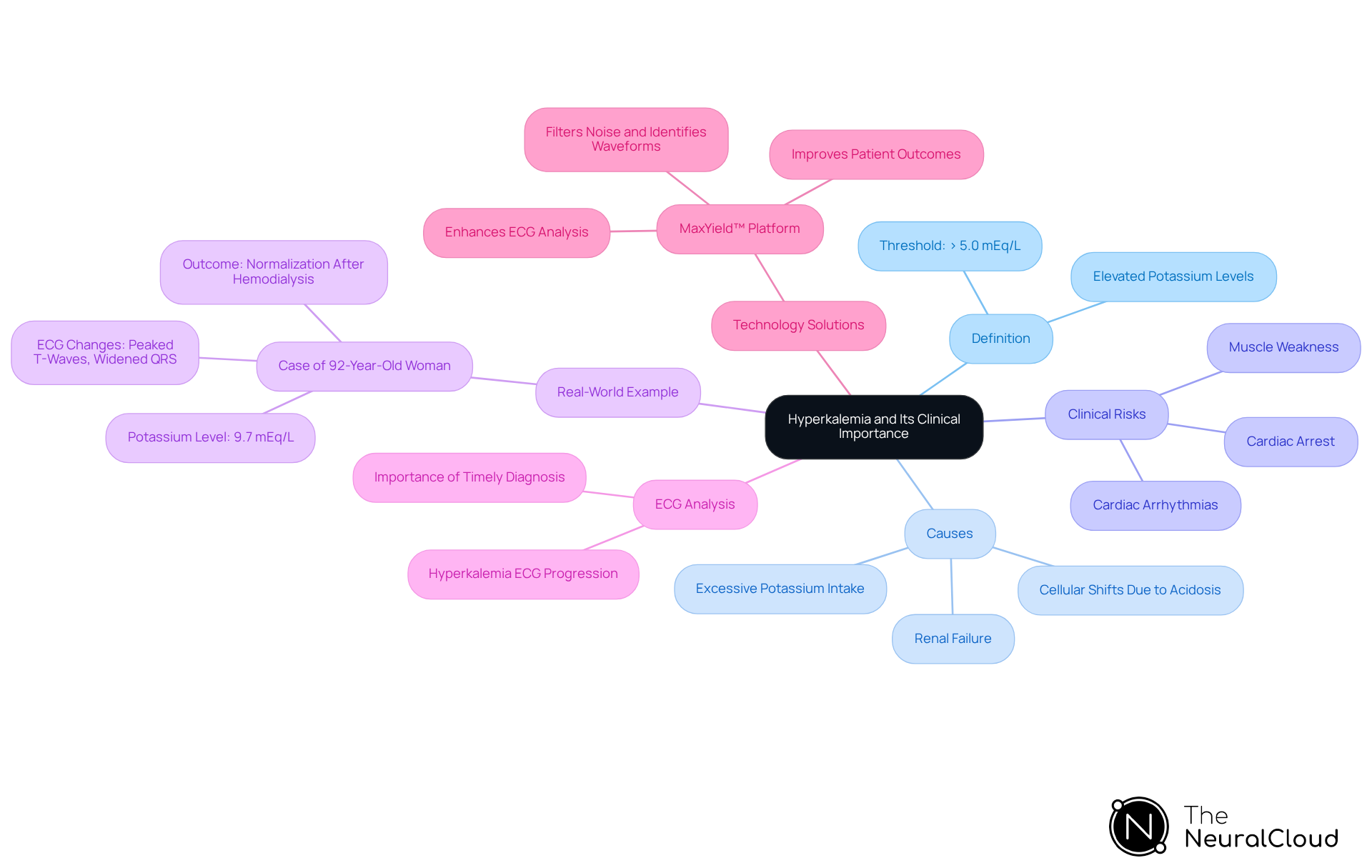
Hyperkalemia is characterized by elevated levels of potassium in the blood, typically exceeding 5.0 mEq/L. This condition can arise from various factors, including renal failure, excessive potassium intake, or cellular shifts due to acidosis. Clinically, it poses significant risks, as it can lead to life-threatening complications, muscle weakness, and potentially cardiac arrest. Statistics indicate that around 30 million adults in the U.S. suffer from chronic kidney disease, a condition that notably increases the risk of high potassium levels and its related complications.
Real-world examples illustrate the severity that accompanies ECG changes. For instance, a case involving a 92-year-old woman with stage 4 kidney disease presented with critically high electrolyte levels of 9.7 mEq/L, resulting in symptoms that included significant abnormalities such as peaked T waves and widened QRS complexes. After urgent hemodialysis, her electrolyte levels normalized, and the ECG changes resolved, underscoring the critical need for timely intervention in hyperkalemia.
The clinical significance of ECG changes cannot be overstated. The progression of hyperkalemia ECG can disrupt normal heart rhythms, leading to arrhythmias that may result in sudden cardiac events. Cardiologists emphasize the importance of identifying high potassium levels early, as timely interventions can greatly reduce morbidity and mortality.
The technology by Neural Cloud Solutions addresses the challenges in ECG interpretation by enhancing the accuracy of potassium readings. It efficiently filters noise and identifies unique waveforms, which is vital for diagnosing and managing hyperkalemia. This technology not only improves diagnostic accuracy but also empowers healthcare professionals to make informed decisions quickly.
Incorporating the technology into clinical practice offers several advantages. It streamlines the process, reduces the risk of misdiagnosis, and ultimately enhances patient outcomes. By leveraging advanced technology, healthcare professionals can better manage the implications of hyperkalemia and their impact on cardiac health.
Identify Key ECG Changes in Hyperkalemia
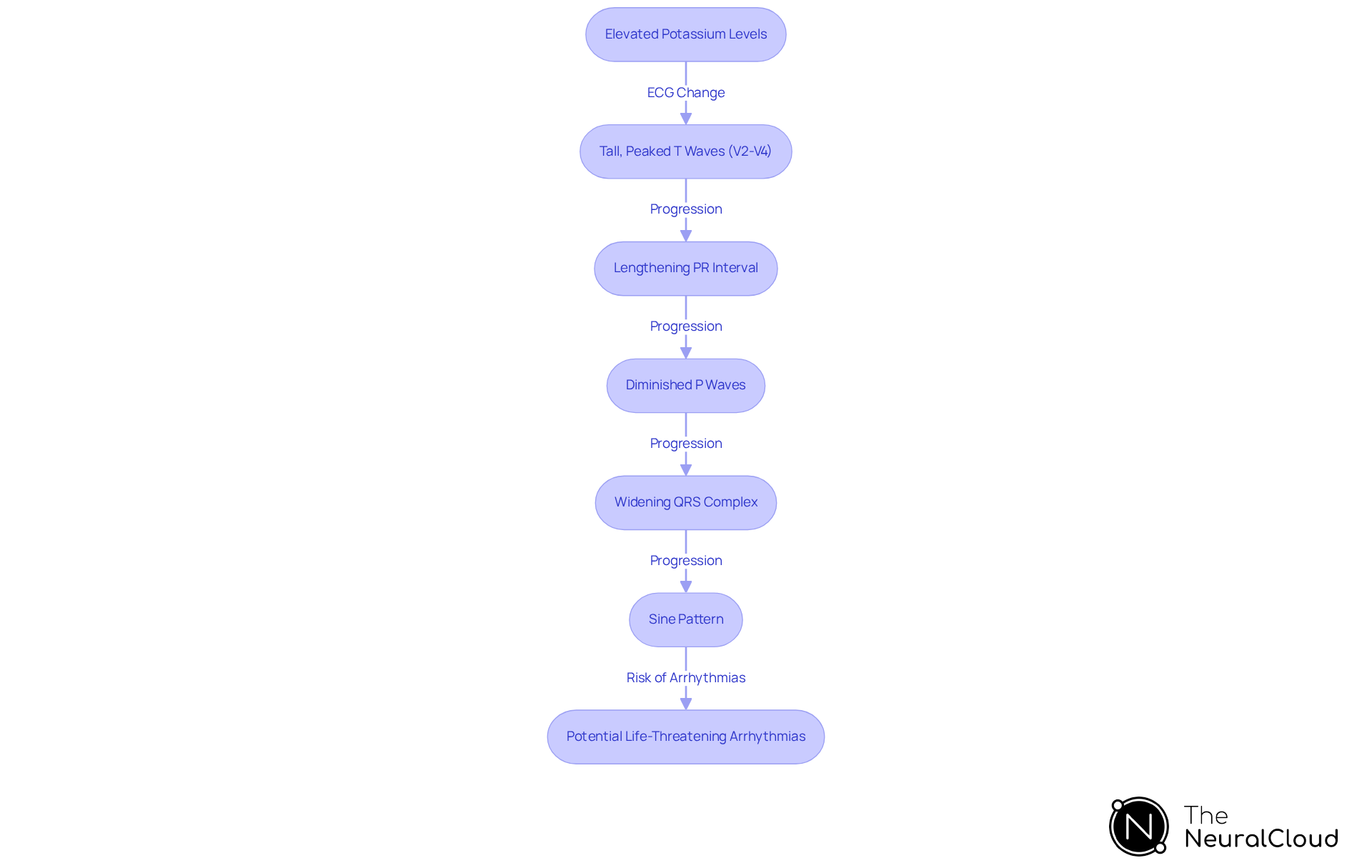
The response to elevated potassium levels is critical for effective clinical management. Initially, ECG changes are prominently observed in the precordial leads (V2-V4), serving as an early indicator of elevated potassium levels. As these levels rise, the PR interval may lengthen, and P waves can diminish or even disappear completely. This is followed by T wave changes, which can merge with the T wave, resulting in a sine pattern-a hallmark of hyperkalemia. In extreme cases, these changes can lead to arrhythmias such as ventricular fibrillation or asystole.
Real-life examples underscore the significance of these ECG alterations. For instance, a patient with a potassium level of 9.0 mEq/L displayed a sine pattern on their ECG, necessitating urgent medical attention. Cardiologists emphasize that timely intervention is paramount; as one expert noted, "the nature of the ECG changes serves as a more reliable predictor of outcomes than the serum potassium level itself." Recent studies indicate that approximately 32% of patients with high potassium levels present with distinct ECG changes, highlighting the prevalence of hyperkalemia in this population. Understanding the ECG changes is crucial for the prompt and effective management.
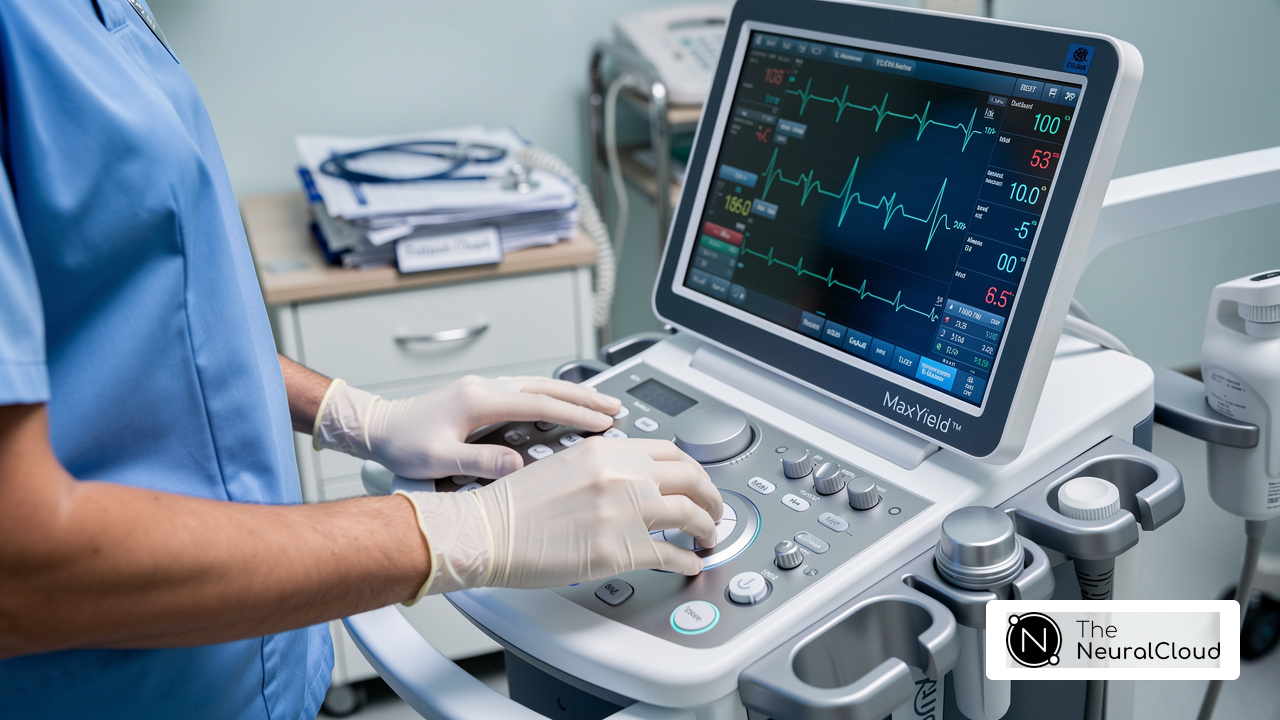
To enhance the accuracy of ECG interpretation in such cases, automated analysis tools can be invaluable. This automated ECG analysis platform offers several key features:
- Noise Filtering: It maps ECG signals through noise, isolating and labeling key features in every heartbeat.
- Detailed Insights: By transforming noisy recordings into clear data, it supports clinicians in identifying cardiac events.
- Decision Support: MaxYield™ empowers healthcare professionals to make confident decisions based on accurate ECG analysis.
The advantages of using MaxYield™ are significant for healthcare professionals. By comprehending the ECG changes and categorizing potassium elevation severity as mild (5.3 - 6.0 mmol/L), moderate (6.0 - 6.9 mmol/L), and severe (≥ 7.0 mmol/L), clinicians can ensure timely and effective management of the condition. This platform not only improves ECG analysis but also enhances patient outcomes through informed clinical decisions.
Apply Systematic Interpretation Techniques for ECG Changes
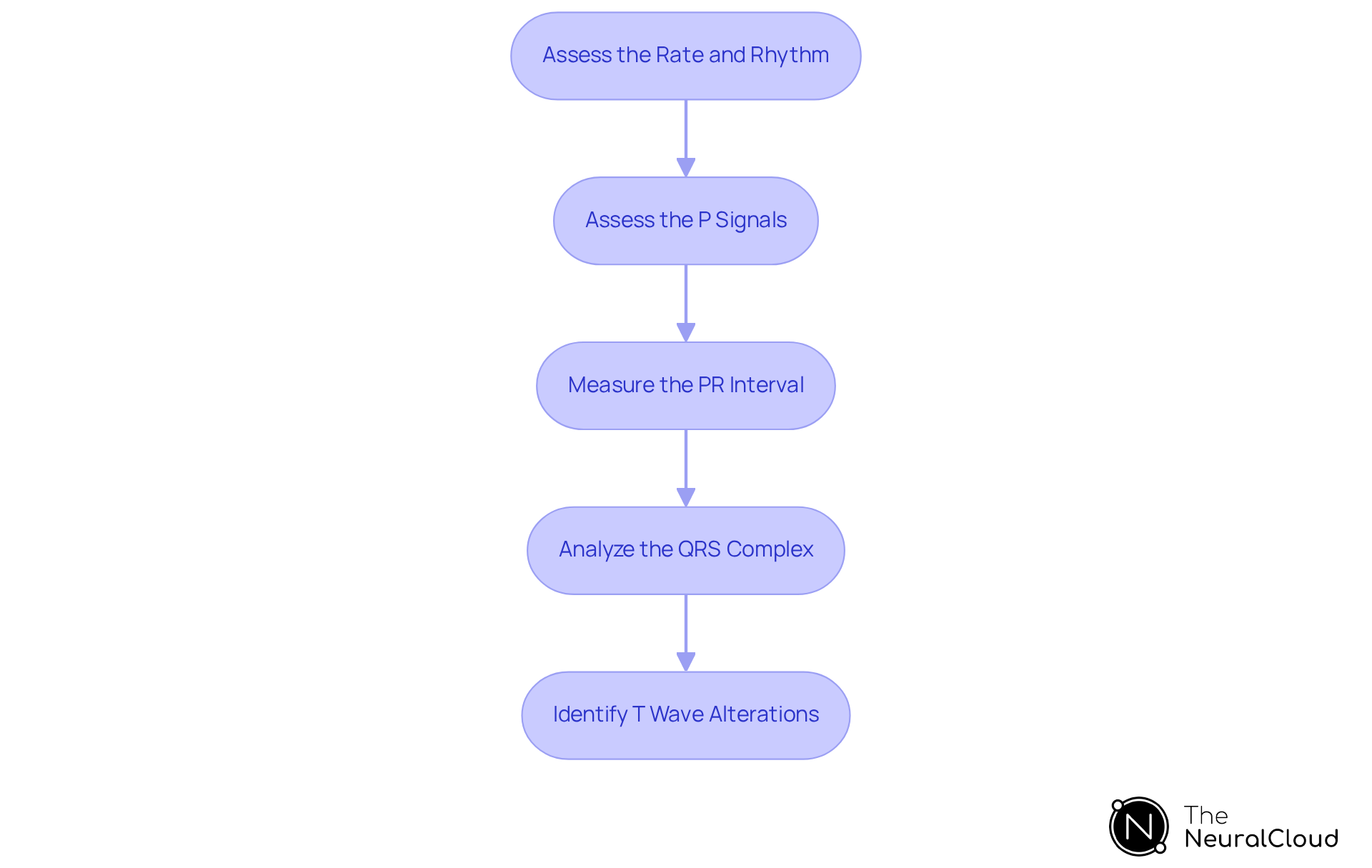
To effectively interpret ECG changes, clinicians should adopt a structured methodology:
- Determine whether the heart rate is bradycardic or tachycardic, as this can influence clinical decisions.
- Assess the P wave signals: Look for signs of flattening or complete disappearance of P signals, which indicate hyperkalemia. Reduced P wave amplitude can mimic conditions like atrial fibrillation, complicating diagnosis.
- Measure the PR interval: A prolonged PR interval indicates conduction delay, a sign of hyperkalemia.
- Pay attention to any widening of the QRS complex, which is indicative of severe potassium excess. As potassium levels increase, the QRS complex may blend with T waves, creating a sine pattern, a hallmark of critical high potassium levels.
- Look for T wave changes, especially in precordial leads, which are frequently the earliest diagnostic indicators of mild to moderate elevated potassium levels. The distinctive 'tented' morphology of these T waves is crucial for early detection.
This systematic method not only helps in identifying crucial ECG alterations but also enables prompt action, which is vital since complications can arise unexpectedly during hyperkalemia ECG progression. Skilled ECG analysis is essential, as research shows that physician precision in identifying hyperkalemia ECG progression through ECG is relatively low, with cardiologists attaining approximately 36% accuracy and emergency physicians around 28%. Therefore, integrating clinical context and laboratory results with ECG findings is paramount for accurate diagnosis and effective management.
Explore Management Strategies Based on ECG Findings
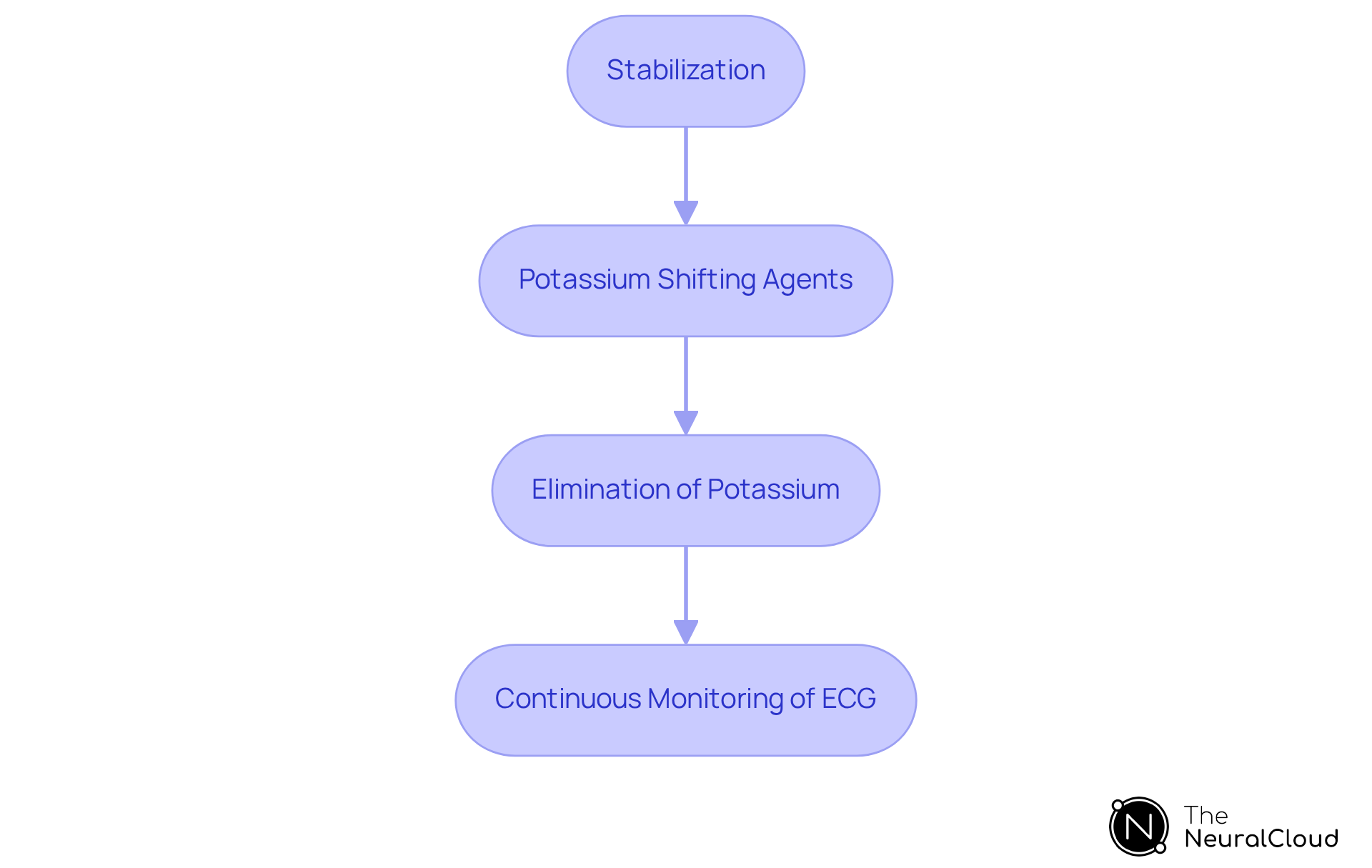
Effective management of hyperkalemia relies on ECG findings and the level of potassium. The following steps outline a comprehensive approach:
- Stabilization: Administer calcium gluconate or calcium chloride to stabilize the cardiac membrane, crucial for preventing arrhythmias associated with increased potassium concentrations.
- Treatment: Utilize insulin combined with glucose, beta-agonists, or sodium bicarbonate to facilitate the intracellular shift of potassium, thereby reducing serum levels. Research shows that insulin treatment can decrease electrolyte levels significantly, with some patients undergoing a reduction of up to 1.0 mEq/L within the first 24 hours.
- Removal: For individuals with kidney dysfunction or severely elevated levels of potassium, consider diuretics or dialysis as effective methods for removal. Recent protocols emphasize the need for intervention in cases of severe hyperkalemia, particularly in patients with end-stage kidney disease.
- Monitoring is essential to evaluate treatment efficacy and detect any arrhythmias that may arise during the management of hyperkalemia, especially considering the patient's clinical status. This practice is supported by findings that highlight the importance of continuous monitoring, which is essential for monitoring and allowing for timely interventions.
- Signal Processing: Enhances the clarity of ECG signals, ensuring reliable readings.
- Wave Recognition: Improves the accuracy of ECG analysis, aiding in quicker decision-making.
- Workflow Optimization: Boosts productivity, allowing clinicians to focus on critical tasks.
By leveraging the capabilities of MaxYield™, clinicians can enhance the management of hyperkalemia, ensuring patient safety and optimizing treatment outcomes.
Conclusion
Understanding hyperkalemia and its ECG progression is crucial for effective patient management, especially considering the serious implications of elevated potassium levels on cardiac health. Early detection and timely intervention are vital, as they can significantly reduce the risks of life-threatening arrhythmias and other complications.
ECG analysis presents challenges, particularly in recognizing changes associated with hyperkalemia. The MaxYield™ platform addresses these challenges by offering advanced features that enhance ECG interpretation. For instance, it allows for the systematic identification of peaked T waves and the recognition of severe arrhythmias indicated by a sine wave pattern. This capability is essential for healthcare professionals who need to make informed decisions quickly and accurately.
The advantages of the MaxYield™ platform extend beyond just improved analysis. By integrating advanced technology, clinicians can adopt a proactive approach to managing hyperkalemia. This not only ensures patient safety but also optimizes outcomes through the implementation of appropriate treatment protocols. The platform empowers healthcare professionals to prioritize the recognition of ECG changes, ultimately improving the management and prognosis of affected patients.
In conclusion, a thorough understanding of hyperkalemia's ECG manifestations, coupled with the innovative features of the MaxYield™ platform, is key to effective patient care. By leveraging both clinical insights and technological advancements, the healthcare community can significantly enhance patient management strategies.
Frequently Asked Questions
What is hyperkalemia?
Hyperkalemia is a medical condition characterized by elevated levels of potassium in the blood, typically exceeding 5.0 mEq/L.
What causes hyperkalemia?
Hyperkalemia can arise from various factors, including renal failure, excessive potassium intake, or cellular shifts due to acidosis.
Why is hyperkalemia clinically important?
Elevated potassium levels pose significant risks, as they can lead to life-threatening cardiac arrhythmias, muscle weakness, and potentially cardiac arrest.
How common is hyperkalemia in patients with chronic kidney disease?
Approximately 30 million adults in the U.S. suffer from chronic kidney disease, which notably increases the risk of high potassium levels and related complications.
Can you provide an example of hyperkalemia and its effects on ECG?
A case involved a 92-year-old woman with stage 4 chronic kidney disease who presented with critically high potassium levels of 9.7 mEq/L, resulting in significant ECG abnormalities such as peaked T-waves and widened QRS complexes. After urgent hemodialysis, her electrolyte levels normalized, and the ECG changes resolved.
What is the significance of monitoring ECG changes in hyperkalemia?
The progression of hyperkalemia ECG can disrupt normal cardiac conduction, leading to arrhythmias that may result in sudden cardiac events. Early identification of high potassium levels is crucial for timely diagnosis and treatment.
How does the MaxYield™ platform assist in managing hyperkalemia?
The MaxYield™ platform enhances the accuracy of ECG readings by filtering noise and identifying unique waveforms, which is vital for diagnosing and managing elevated potassium levels.
What are the advantages of incorporating the MaxYield™ platform into clinical practice?
Incorporating the MaxYield™ platform streamlines the ECG analysis process, reduces the risk of misdiagnosis, and ultimately enhances patient outcomes by enabling healthcare professionals to better manage the implications of elevated potassium levels on cardiac health.
List of Sources
- Define Hyperkalemia and Its Clinical Importance
- cureus.com (https://cureus.com/articles/414177-severe-hyperkalemia-with-cardiac-conduction-abnormalities-in-a-92-year-old-woman-first-reported-case-in-illinois-united-states)
- kidney.org (https://kidney.org/press-room/new-study-shows-hyperkalemia-drug-may-help-kidney-patients-stay-treatment-hypertension)
- ahajournals.org (https://ahajournals.org/doi/10.1161/JAHA.124.035256)
- Identify Key ECG Changes in Hyperkalemia
- Hyperkalaemia (https://litfl.com/hyperkalaemia-ecg-library)
- Hyperkalemia ECG Changes: Peaked T Waves (https://powerfulmedical.com/blog/hyperkalemia-ecg-critical-changes)
- Changes in ECG in Acute versus Chronic Hyperkalemia | Docwire News (https://docwirenews.com/post/changes-in-ecg-in-acute-versus-chronic-hyperkalemia)
- cureus.com (https://cureus.com/articles/414177-severe-hyperkalemia-with-cardiac-conduction-abnormalities-in-a-92-year-old-woman-first-reported-case-in-illinois-united-states)
- emedicine.medscape.com (https://emedicine.medscape.com/article/240903-workup)
- Apply Systematic Interpretation Techniques for ECG Changes
- businesswire.com (https://businesswire.com/news/home/20250916497308/en/AccurKardia-Announces-Clinical-Pilot-Study-of-Its-AK-Guard-ECG-based-AI-powered-Hyperkalemia-Detection-Software)
- tricog.com (https://tricog.com/how-to-interpret-ecg-in-hyperkalemia?srsltid=AfmBOooBGwOZXQyftcHuhGmpVnyKTo110UvIvegIOUwB2nKPilYDsZS9)
- Hyperkalemia - StatPearls - NCBI Bookshelf (https://ncbi.nlm.nih.gov/books/NBK470284)
- Hyperkalaemia (https://litfl.com/hyperkalaemia-ecg-library)
- ECG Changes in Hyperkalemia | Patient Care Online (https://patientcareonline.com/view/ecg-changes-hyperkalemia)
- Explore Management Strategies Based on ECG Findings
- pmc.ncbi.nlm.nih.gov (https://pmc.ncbi.nlm.nih.gov/articles/PMC9069919)
- Hyperkalemia – Diagnosis and Treatment : Emergency Care BC (https://emergencycarebc.ca/clinical_resource/clinical-summary/hyperkalemia-diagnosis-and-treatment)
- Nondialysis Management of Severe Hyperkalemia With ECG Changes | Docwire News (https://docwirenews.com/post/nondialysis-management-of-severe-hyperkalemia-with-ecg-changes)
- pmc.ncbi.nlm.nih.gov (https://pmc.ncbi.nlm.nih.gov/articles/PMC8485984)