Introduction
The evolution of ECG analysis has significantly advanced, particularly with an emphasis on anterior leads, which are crucial for diagnosing life-threatening conditions such as myocardial infarction. As healthcare professionals navigate the complexities of ECG interpretation, the integration of advanced technologies, including Neural Cloud Solutions' MaxYield™ platform, stands out as a transformative development.
This article explores seven essential insights that highlight the importance of anterior leads, the challenges associated with misinterpretation, and the revolutionary impact of AI and ongoing education in improving diagnostic accuracy. Clinicians are encouraged to consider how they can leverage these advancements to enhance patient outcomes and reduce the risks related to anterior lead misplacement.
Neural Cloud Solutions' MaxYield™: Transforming ECG Analysis for Anterior Leads
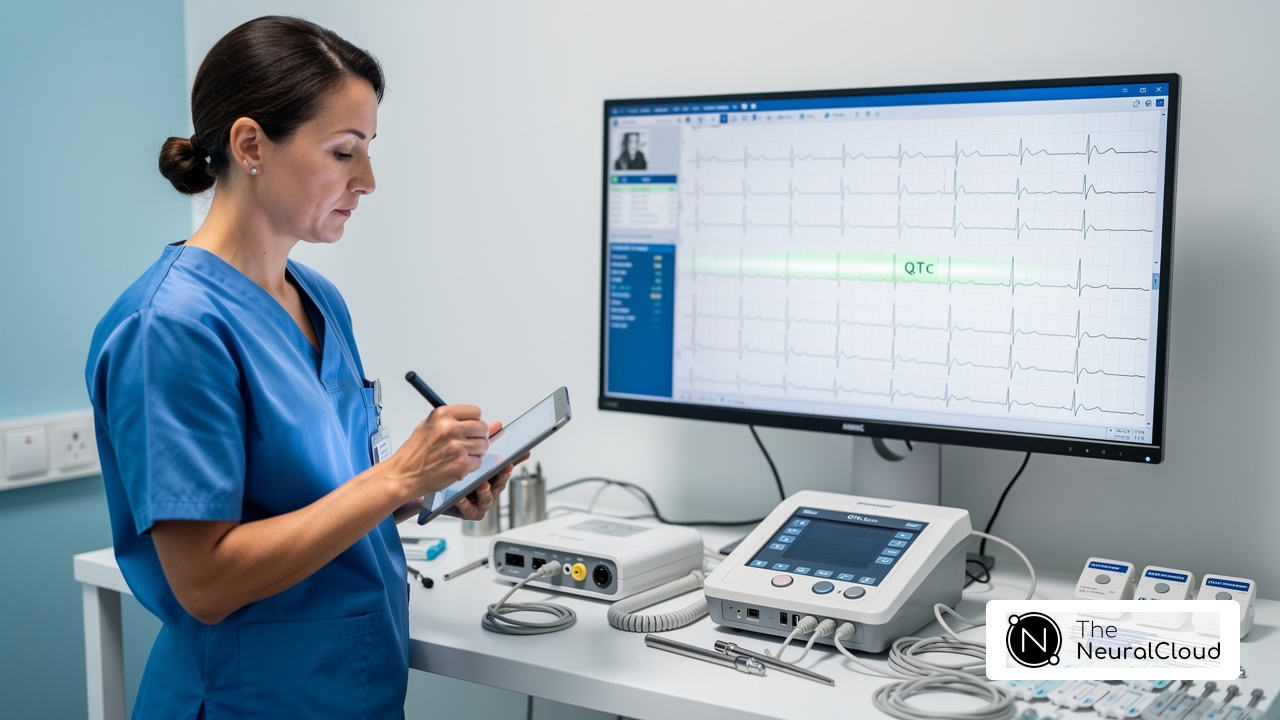
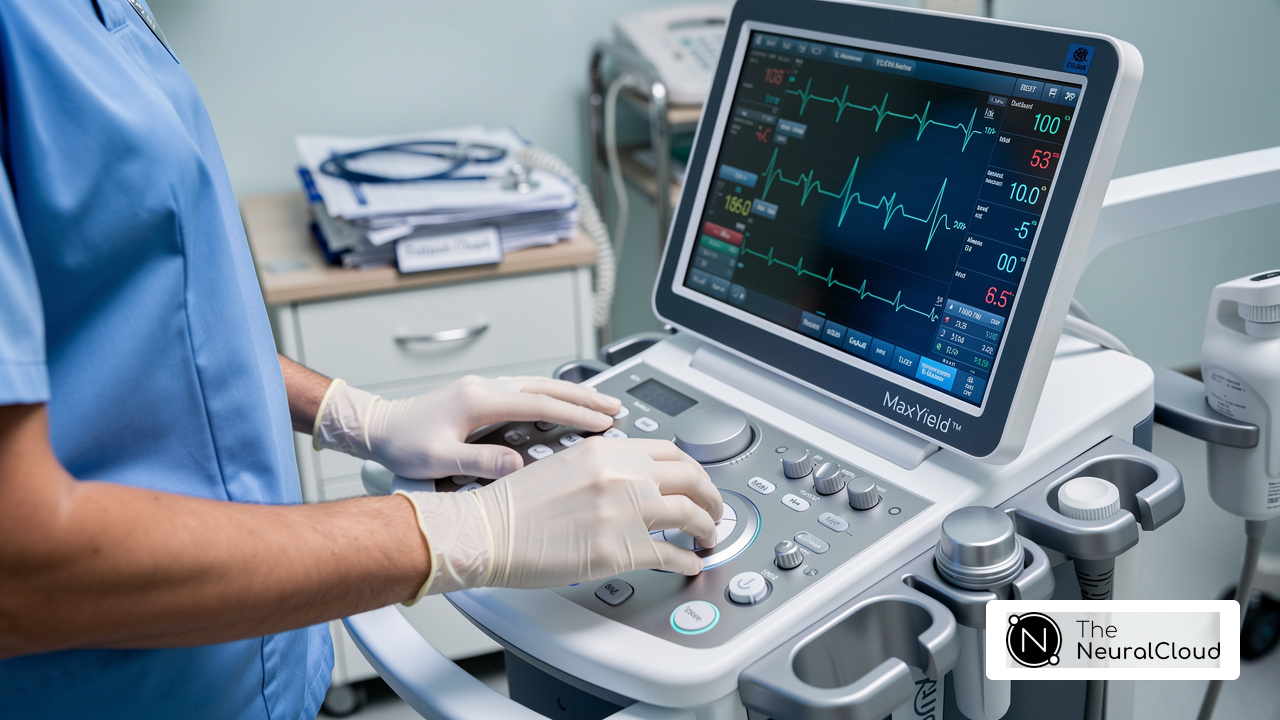
Neural Cloud Solutions' platform is at the forefront of transforming ECG analysis, particularly for signals obtained from anterior leads. The platform utilizes advanced AI algorithms and in-depth noise filtering, which significantly enhances the accuracy of readings. This improvement enables healthcare professionals to make swift, informed decisions. With the capability to process over 200,000 heartbeats in under five minutes, MaxYield™ optimizes workflow, allowing clinicians to focus on critical diagnostic responsibilities rather than being burdened by time-consuming manual analysis. Such efficiency is crucial for analyzing cardiac rhythms, which are essential in diagnosing conditions like myocardial infarction.
The automated processing of the platform not only streamlines workflows but also improves diagnostic accuracy. By highlighting key features such as the P-wave, QRS complex, and T-wave, it effectively addresses common challenges, including noise and signal artifacts that can obscure vital information. Consequently, healthcare providers can confidently identify cardiac events, leading to timely interventions. The combination of these features positions MaxYield™ as an invaluable tool in the realm of ECG analysis, ultimately supporting healthcare professionals in delivering high-quality care.

Understanding Anterior Leads: Key Characteristics and Placement Techniques
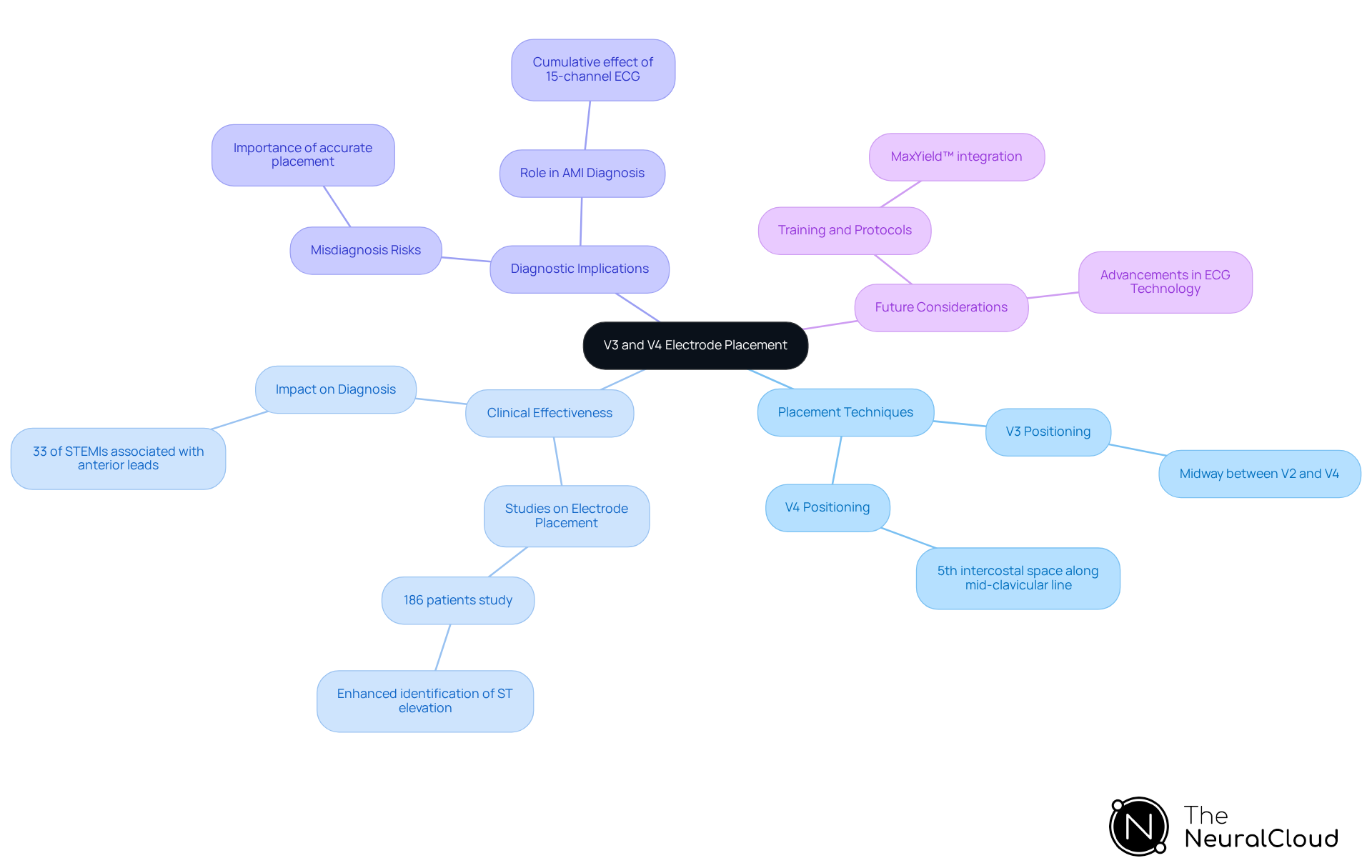
V3 and V4 electrodes are strategically positioned on the chest to observe electrical activity from the front wall of the heart. Proper placement is paramount; V3 is typically positioned midway between V2 and V4, while V4 is located at the fifth intercostal space along the mid-clavicular line. These electrodes are especially responsive to front wall ischemia, making their proper positioning crucial for accurate diagnosis and reducing the chance of misdiagnosis.
In clinical environments, the use of anterior lead systems has shown effectiveness, with studies suggesting that prompt and precise electrode positioning can greatly improve diagnostic outcomes. For instance, a study involving 186 patients demonstrated that the inclusion of posterior electrodes enhanced the identification of ST elevation in more patients, highlighting the significance of thorough electrode placement.
Cardiologists stress the essential importance of accurate electrode positioning. One observed that 'the cumulative effect of the additional leads on the diagnosis and management of AMI was assessed,' emphasizing how extra channels can enhance diagnostic precision. Furthermore, the placement of V3 and V4 electrodes is essential, as they play a crucial role in detecting anterior leads associated with myocardial infarction, which represents approximately 33% of all STEMIs.
In 2025, the significance of V3 and V4 electrodes in ECG analysis remains a focal point for clinicians, as these electrodes are essential to accurately diagnosing conditions that could result in severe complications, including cardiogenic shock and left ventricular dysfunction. Ensuring that these electrodes are positioned accurately not only assists in prompt diagnosis but also enhances long-term patient outcomes. A key takeaway for health tech developers is to prioritize training and adherence to proper placement protocols while considering the integration of AI technologies. This platform through automated labeling and advanced noise filtering, addressing common challenges in ECG analysis and ensuring clinicians can rely on precise data for informed decision-making.
Clinical Importance of Anterior Leads in Diagnosing Myocardial Infarction
Anterior leads are essential for identifying myocardial infarction (MI), particularly ST-elevation myocardial infarction (STEMI). ST-segment elevation in these electrodes often indicates blockage of the left descending artery, which is associated with a considerably greater risk of complications. For instance, extensive anterior MI is associated with a total mortality rate of 27%, compared to just 11% for inferior MI. Prompt recognition of ST-segment changes can facilitate timely interventions, which are vital for patient outcomes.
Recent studies highlight that ST-segment elevation is a strong indicator of proximal LAD occlusion, underscoring the importance of these leads in clinical practice. However, challenges in ECG analysis, such as misinterpretation of waveforms, can hinder accurate interpretation. The integration of wearable technology and AI platform significantly enhances the efficiency of ECG analysis. This technology employs advanced algorithms and wave recognition, allowing for rapid isolation of ECG waves even in recordings with high levels of noise and artifact.
This capability directly addresses common diagnostic challenges, ensuring that ECGs are accurately interpreted and labeled. Furthermore, the automation of ECG labeling not only improves productivity but also contributes to cost reduction by minimizing the time spent on manual tasks. Cardiologists emphasize that early identification of these changes can result in improved management strategies, ultimately enhancing survival rates. Real-world examples show that patients presenting with ST elevation in anterior leads often require urgent reperfusion therapy, which is essential for decreasing the occurrence of serious complications like cardiogenic shock.
Therefore, understanding the clinical importance of anterior leads, enhanced by the sophisticated attributes of MaxYield™, is vital for effective cardiac care. The platform's features, such as automated labeling and real-time analysis, provide significant advantages for healthcare professionals, ensuring timely and accurate interventions that can lead to better patient outcomes.

Common Misinterpretations of Anterior Leads: Pitfalls to Avoid
Misunderstandings of front electrodes often arise from electrode misplacement or physiological variations. For example, incorrect placements can lead to false-positive results, such as myocardial infarction. Research indicates a 17% to 24% likelihood that diagnostic interpretations will vary due to incorrect electrode configurations. Dr. Jesse McLaren highlights that misinterpretations complicate the clinical picture. To mitigate these risks, clinicians must remain vigilant regarding proper placement and interpretation, as misinterpretations can lead to unnecessary interventions or treatment delays.
Understanding the variations associated with anterior leads is crucial. For instance, V1 can resemble aVR due to the direction of ventricular depolarization, which can further impact diagnostic accuracy. By utilizing Neural Cloud Solutions' MaxYield™, healthcare professionals can significantly enhance the reliability of ECG analyses. This platform features advanced algorithms and wave recognition, which quickly labels P, QRS, and T wave onsets and offsets. Additionally, it recovers previously hidden segments of extensive recordings, providing clear data sets and clean signals that assist clinicians in navigating the complexities of ECG interpretation with greater confidence.
Healthcare professionals are encouraged to frequently assess electrode positions and to refine their diagnostic procedures. By doing so, they can improve accuracy in ECG interpretation, ultimately benefiting patient care. The combination of continuous education and the advanced capabilities of the MaxYield™ platform empowers clinicians to make informed decisions, enhancing the overall quality of healthcare delivery.

Advancements in ECG Technology: Impact on Anterior Lead Interpretation
Recent advancements in ECG technology, especially with the integration of AI, have significantly enhanced the interpretation of anterior leads. The platform exemplifies this progress by employing advanced noise filtering and adaptive algorithms that enhance signal clarity and reduce artifacts. This functionality allows for more accurate diagnoses, as the platform can rapidly isolate ECG waves even in recordings with high levels of noise and artifact. Furthermore, this technology can salvage previously obscured sections of 12-Lead, and patch monitor recordings, ensuring that no critical data is lost.
The continuous learning model of the system evolves with each use, analyzing intricate patterns in ECG data that may be overlooked by traditional methods, resulting in earlier and more precise diagnoses of conditions such as myocardial infarction. Additionally, the platform automates repetitive tasks, streamlining workflows and enhancing clinician confidence in patient assessments. By addressing the challenges in ECG interpretation, the technology represents a significant advancement in the field, ultimately benefiting healthcare professionals and their patients.

AI Integration in ECG Analysis: Enhancing Clarity for Anterior Leads
The incorporation of AI in ECG analysis has notably transformed the interpretation of data, especially with the platform provided by Neural Cloud Solutions. This innovative technology utilizes algorithms to efficiently clean and label ECG signals, significantly reducing the time clinicians spend on manual analysis. The system enhances signal clarity and offers beat-by-beat analysis, facilitating diagnosis and enabling immediate alerts for critical changes in a patient's cardiac status. Consequently, healthcare professionals can make quicker, more informed decisions regarding patient care.
For instance, the system has shown the capability to identify and recover previously obscured sections of lengthy recordings, allowing for timely interventions that can save lives. As one cardiologist noted, "This product has revolutionized patient care by streamlining processes, enabling a focus on high-level decision-making rather than tedious manual tasks."
Advancements in algorithms are anticipated to further improve the accuracy and reliability of ECG assessments, solidifying AI's role as an essential tool in modern cardiac care. However, challenges such as explainability and privacy concerns remain critical considerations in the ongoing integration of AI technologies in clinical settings.

Continuous Education: Staying Informed About Anterior Leads
Continuous education is essential for healthcare professionals involved in ECG analysis, especially regarding anterior leads. Engaging in workshops, online courses, and conferences equips clinicians with the skills and interpretation techniques. For instance, the CARDIAC RHYTHM MANAGEMENT session on April 26, 2025, offers practical training that enhances ECG interpretation abilities and showcases innovative techniques that improve diagnostic accuracy, especially through the utilization of artificial intelligence.
Healthcare professionals face challenges in ECG interpretation, including misdiagnosis and data overload. The technology addresses these challenges by transforming lengthy and noisy recordings into clear waveforms. This capability is crucial for accurate diagnosis. Engaging with professional organizations and utilizing educational resources can significantly enhance knowledge and skills in this critical area of cardiac care.
Testimonials from users of the technology further illustrate its effectiveness. Educators in the field emphasize that continuous education, combined with cutting-edge tools like MaxYield™, not only bolster individual competencies but also contribute to improved patient outcomes. By ensuring that clinicians are well-versed in the latest practices and technologies, the platform ultimately enhances the quality of cardiac care delivered to patients.

Role of Anterior Leads in Comprehensive Cardiac Assessments
Frontal electrodes play a crucial role in comprehensive cardiac assessments, providing essential insights into the electrical activity of the front wall. Their interpretation is critical not only for diagnosing myocardial infarction but also for evaluating other cardiac conditions, including arrhythmias and bundle branch blocks. By integrating data from anterior leads with additional clinical findings, healthcare professionals can construct a more complete picture of a patient's health.
Advancements in ECG technology enhance these prospects significantly. This platform employs advanced noise filtering and distinct wave recognition to isolate ECG waves from recordings that may be affected by baseline wander, movement, or muscle artifacts. This capability not only increases the accuracy of interpreting the ECG but also recovers previously obscured sections of extended recordings.
The automation of the labeling process and the continuous evolution of its algorithms contribute to a more efficient and cost-effective approach to ECG analysis. For example, in emergency settings, the application of MaxYield™ has demonstrated its ability to facilitate the rapid identification of myocardial infarction, thereby enabling timely interventions. Through these advancements, healthcare professionals can enhance diagnostic accuracy and improve patient outcomes.

Anatomical Considerations for Accurate Placement of Anterior Leads
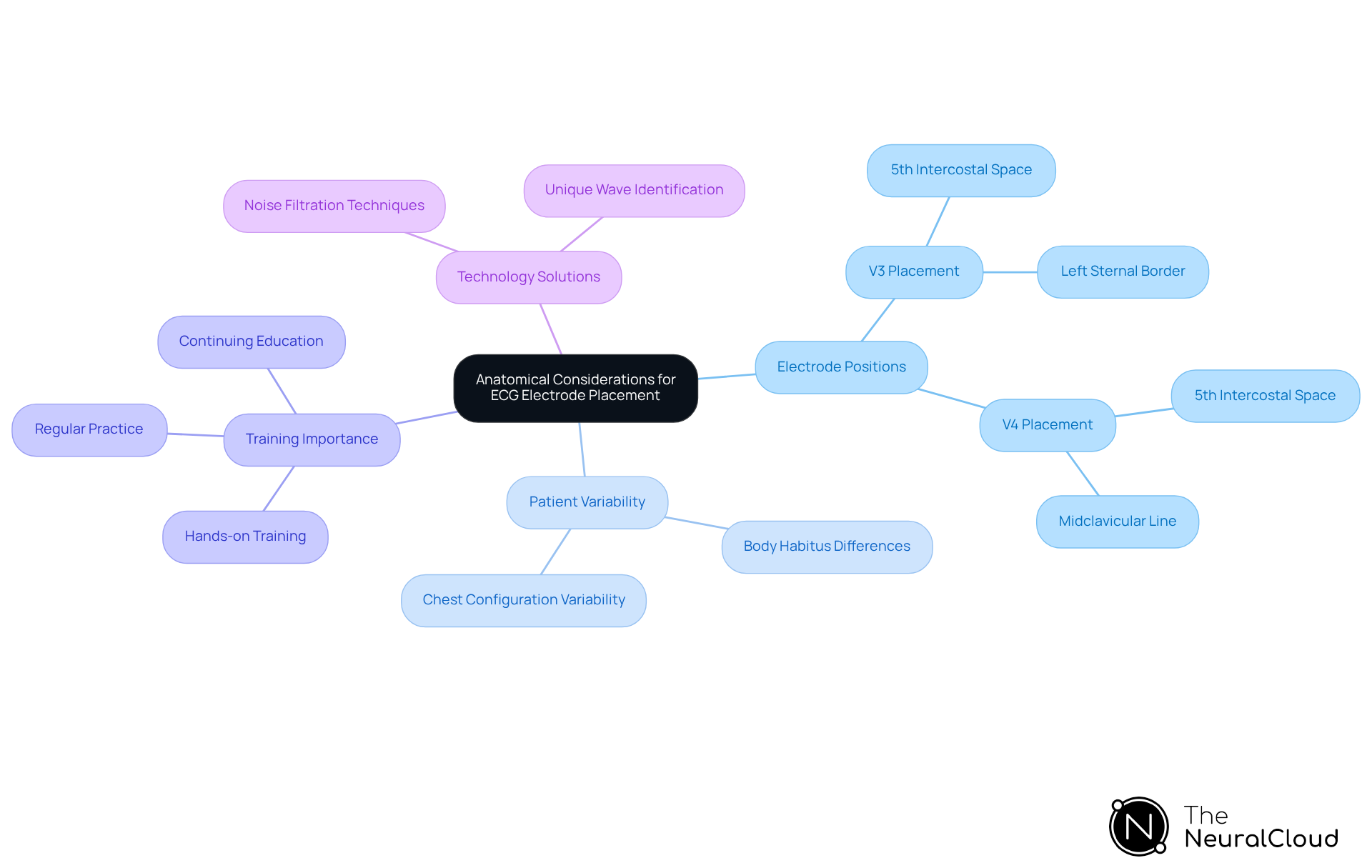
The precise positioning of front electrodes, particularly V3 and V4, is contingent upon a comprehensive understanding of anatomical landmarks. These electrodes must be positioned at specific intercostal spaces:
- V3 is typically placed at the 5th intercostal space along the left sternal border.
- V4 is located at the 5th intercostal space in the midclavicular line.
This accurate placement of the electrodes is essential for effectively capturing the electrical activity of the anterior wall. Variations in individual patient anatomy, including differences in body habitus and chest configuration, significantly impact the reliability of ECG readings. A recent study highlighted that only 41.6% of placements were deemed 'acceptable,' emphasizing the necessity for precise placement techniques.
Moreover, the study found that ongoing training is crucial, reinforcing the importance of ongoing education in ECG interpretation. Clinicians must understand these anatomical considerations to prevent misplacement and enhance the accuracy of readings across diverse patient populations.
The MaxYield platform addresses these challenges by employing advanced noise filtration and unique wave identification techniques. This technology aids in distinguishing ECG waves affected by baseline drift, motion, and muscle interference, thereby improving signals recorded by front electrodes. As a result, clinicians can interpret ECG results with greater reliability, irrespective of physiological variability or signal artifacts.
Edwin L. Clopton aptly stated, 'A valid 12-lead electrocardiogram (ECG) depends on correct acquisition technique, particularly on the placement of electrodes.' This statement underscores the critical importance of proper technique in achieving precise ECG results.
Key Takeaways: Essential Facts About Anterior Leads
- Anterior leads, specifically electrodes V3 and V4, are essential for diagnosing myocardial infarction (MI) and assessing overall cardiac health, as they provide crucial insights into the electrical activity of the anterior wall. The incorporation of AI platform enhances the assessment of these leads, offering clarity even in the presence of noise and artifacts.
- Knowledge of anterior leads and a comprehensive understanding of their characteristics are vital for precise ECG interpretation, which directly impacts patient outcomes. This system facilitates rapid isolation of critical data from recordings that may otherwise be obscured, thereby enhancing interpretative accuracy.
- Recent advancements in ECG technology, particularly AI integration, have markedly improved the clarity and reliability of ECG data, empowering healthcare professionals to make more informed decisions. The advanced system employs cutting-edge AI technology to transform lengthy and noisy ECG recordings into clear signals, revolutionizing the analysis process.
- Ongoing education and training are crucial for healthcare professionals to remain current with best practices and advancements in ECG analysis. This initiative supports the evolution of practices aimed at improving accuracy and efficiency.
- Anatomical considerations, such as the positioning of the heart within the thoracic cavity, are pivotal for ensuring proper placement of anterior leads, which is fundamental for effective cardiac assessments. With advanced technology, challenges posed by physiological variability and signal artifacts are effectively addressed, ensuring high-quality ECG analysis.

Conclusion
The significance of anterior leads in ECG analysis is paramount, as they are instrumental in diagnosing myocardial infarction and assessing overall cardiac health. Neural Cloud Solutions' MaxYield™ platform has revolutionized ECG interpretation, enabling healthcare professionals to achieve enhanced clarity and accuracy in their analyses. By addressing challenges such as noise and signal artifacts, this innovative technology empowers clinicians to prioritize high-quality patient care.
Key insights from this article underscore the importance of:
- Proper electrode placement
- The integration of AI in enhancing ECG clarity
- The necessity for continuous education among healthcare professionals
A thorough understanding of the anatomical considerations and common pitfalls associated with anterior leads is vital for accurate diagnoses and effective patient management. The synergy of advanced technology and ongoing training ensures that clinicians are well-equipped to navigate the complexities of ECG interpretation with confidence.
In light of these advancements, it is crucial for healthcare professionals to embrace the evolving landscape of ECG analysis. Engaging with educational resources and utilizing innovative platforms like MaxYield™ will not only enhance diagnostic capabilities but also improve patient outcomes. The future of cardiac care relies on a commitment to excellence in ECG analysis, making it imperative for clinicians to remain informed and adaptable in their practices.
Frequently Asked Questions
What is MaxYield™ and how does it improve ECG analysis?
MaxYield™ is a platform developed by Neural Cloud Solutions that enhances ECG analysis, particularly for signals from anterior leads. It utilizes advanced AI algorithms and noise filtering methodologies to improve the clarity of ECG data, enabling healthcare professionals to make swift, informed decisions.
How quickly can MaxYield™ process ECG data?
MaxYield™ can process over 200,000 heartbeats in under five minutes, automating repetitive tasks and allowing clinicians to focus on critical diagnostic responsibilities.
Why are anterior leads important in ECG analysis?
Anterior leads are crucial for diagnosing conditions like myocardial infarction (MI), particularly ST-elevation myocardial infarction (STEMI). They help identify blockages in the left descending artery and are essential for accurate diagnosis and timely intervention.
What are the key characteristics and placement techniques for anterior leads?
The V3 and V4 electrodes are positioned on the chest to monitor electrical activity from the front wall of the heart. V3 is placed midway between V2 and V4, while V4 is located at the fifth intercostal space along the mid-clavicular line. Proper placement is vital for accurate ECG analysis.
How does MaxYield™ address common challenges in ECG analysis?
MaxYield™ automates the labeling process and employs advanced noise filtering and wave recognition, allowing for rapid isolation of ECG waves even in recordings with high levels of noise and artifacts. This improves diagnostic accuracy and productivity.
What are the clinical implications of using anterior leads in diagnosing myocardial infarction?
Anterior leads are essential for identifying ST-segment elevation, which indicates blockage of the left descending artery. Prompt recognition of these changes can lead to timely interventions, improving patient outcomes and survival rates.
What advantages does MaxYield™ provide for healthcare professionals?
MaxYield™ enhances diagnostic accuracy through automated labeling and advanced noise filtering, ensuring clinicians can rely on precise data for informed decision-making. This ultimately supports timely and accurate interventions, leading to better patient outcomes.
List of Sources
- Neural Cloud Solutions' MaxYield™: Transforming ECG Analysis for Anterior Leads
- theneuralcloud.com (https://theneuralcloud.com/post/7-key-st-elevation-myocardial-infarction-criteria-for-accurate-diagnosis)
- Understanding Anterior Leads: Key Characteristics and Placement Techniques
- pmc.ncbi.nlm.nih.gov (https://pmc.ncbi.nlm.nih.gov/articles/PMC6511271)
- ncbi.nlm.nih.gov (https://ncbi.nlm.nih.gov/books/NBK562234)
- ECG Lead positioning (https://litfl.com/ecg-lead-positioning)
- journals.sagepub.com (https://journals.sagepub.com/doi/abs/10.1177/0017896912472328)
- thoracickey.com (https://thoracickey.com/chapter-3-anterior-wall-myocardial-infarction)
- Clinical Importance of Anterior Leads in Diagnosing Myocardial Infarction
- ncbi.nlm.nih.gov (https://ncbi.nlm.nih.gov/books/NBK562234)
- Anterior Myocardial Infarction (https://litfl.com/anterior-myocardial-infarction-ecg-library)
- mdpi.com (https://mdpi.com/2673-3846/5/1/9)
- Common Misinterpretations of Anterior Leads: Pitfalls to Avoid
- emergencymedicinecases.com (https://emergencymedicinecases.com/ecg-cases-lead-misplacement-artifact-lead-reversal)
- pmc.ncbi.nlm.nih.gov (https://pmc.ncbi.nlm.nih.gov/articles/PMC5468064)
- researchgate.net (https://researchgate.net/publication/230782069_The_effects_of_electrode_misplacement_on_clinicians'_interpretation_of_the_standard_12-lead_electrocardiogram)
- Advancements in ECG Technology: Impact on Anterior Lead Interpretation
- nature.com (https://nature.com/articles/s41598-024-78028-8)
- nature.com (https://nature.com/articles/s41746-024-01193-7)
- mdpi.com (https://mdpi.com/2673-3846/2/4/39)
- Artificial Intelligence and ECG: A New Frontier in Cardiac Diagnostics and Prevention - PMC (https://pmc.ncbi.nlm.nih.gov/articles/PMC12292989)
- mordorintelligence.com (https://mordorintelligence.com/industry-reports/global-electrocardiograph-ecg-market-industry)
- AI Integration in ECG Analysis: Enhancing Clarity for Anterior Leads
- wires.onlinelibrary.wiley.com (https://wires.onlinelibrary.wiley.com/doi/10.1002/widm.1485)
- Use of Artificial Intelligence in Improving Outcomes in Heart Disease: A Scientific Statement From the American Heart Association | Circulation (https://ahajournals.org/doi/10.1161/CIR.0000000000001201)
- Continuous Education: Staying Informed About Anterior Leads
- researchgate.net (https://researchgate.net/publication/346113079_Artificial_Intelligence_Machine_Learning_and_Reasoning_in_Health_Informatics-Case_Studies)
- events.siemens-healthineers.com (https://events.siemens-healthineers.com/esc)
- bostonscientific.com (https://bostonscientific.com/en-US/medical-specialties/electrophysiology/news---events/hrs2025.html)
- Role of Anterior Leads in Comprehensive Cardiac Assessments
- gehealthcare.com (https://gehealthcare.com/insights/article/beyond-12-leads-the-role-of-additional-ecg-leads-in-ischemia-detection?srsltid=AfmBOop4TzJ-mzJnxF6HLv7o4d378fCVhUqTfTu7G4X_K8uhquBQ6xfI)
- cardiacwire.com (https://cardiacwire.com/top-6-cardiology-trends-from-2025s-first-half)
- STEMI Mimics: Spot Subtle Impostors of Myocardial Infarction (https://powerfulmedical.com/blog/stemi-mimics)
- Anatomical Considerations for Accurate Placement of Anterior Leads
- Assessing the Accuracy of ECG Chest Electrode Placement by EMS and Clinical Personnel Using Two Evaluation Methods | International Journal of Paramedicine (https://internationaljournalofparamedicine.com/index.php/ijop/article/view/2897)
- Key Takeaways: Essential Facts About Anterior Leads
- ncbi.nlm.nih.gov (https://ncbi.nlm.nih.gov/books/NBK562234)
- askfeather.com (https://askfeather.com/resources/ai-impact-healthcare-quotes-2000-2025)
- klara.com (https://klara.com/blog/12-best-quotes-on-the-future-of-healthcare)