Introduction
Clinicians often struggle with the complexities of ST-Elevation Myocardial Infarction (STEMI) interpretation, which can significantly impact patient care. The distinction between anterior and posterior STEMI can be particularly challenging, as misinterpretations can lead to critical delays in treatment and poorer patient outcomes. This article delves into ten key insights that enhance the understanding of anterior versus posterior STEMI ECG interpretation, highlighting the role of advanced AI technologies like Neural Cloud Solutions' MaxYield in refining diagnostic accuracy. With advanced AI technologies, clinicians can enhance diagnostic accuracy, leading to timely interventions and better patient outcomes.
Neural Cloud Solutions' MaxYield: Enhancing Anterior vs Posterior STEMI ECG Analysis
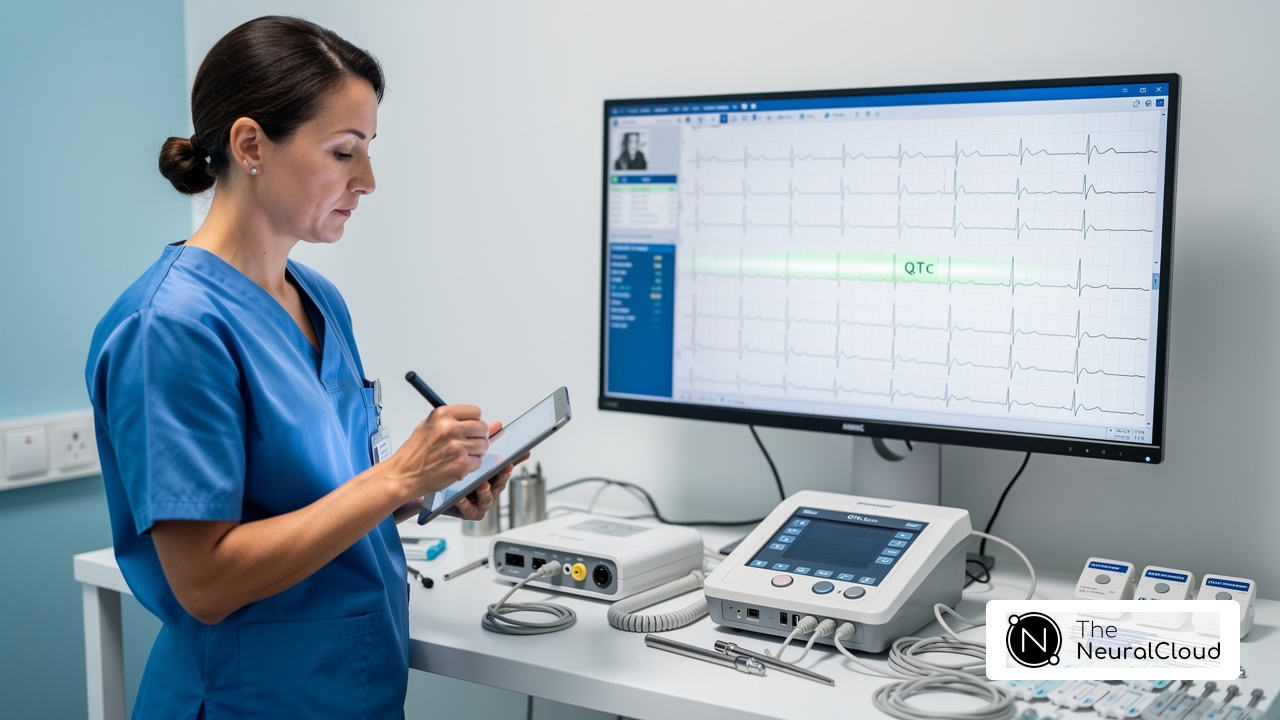
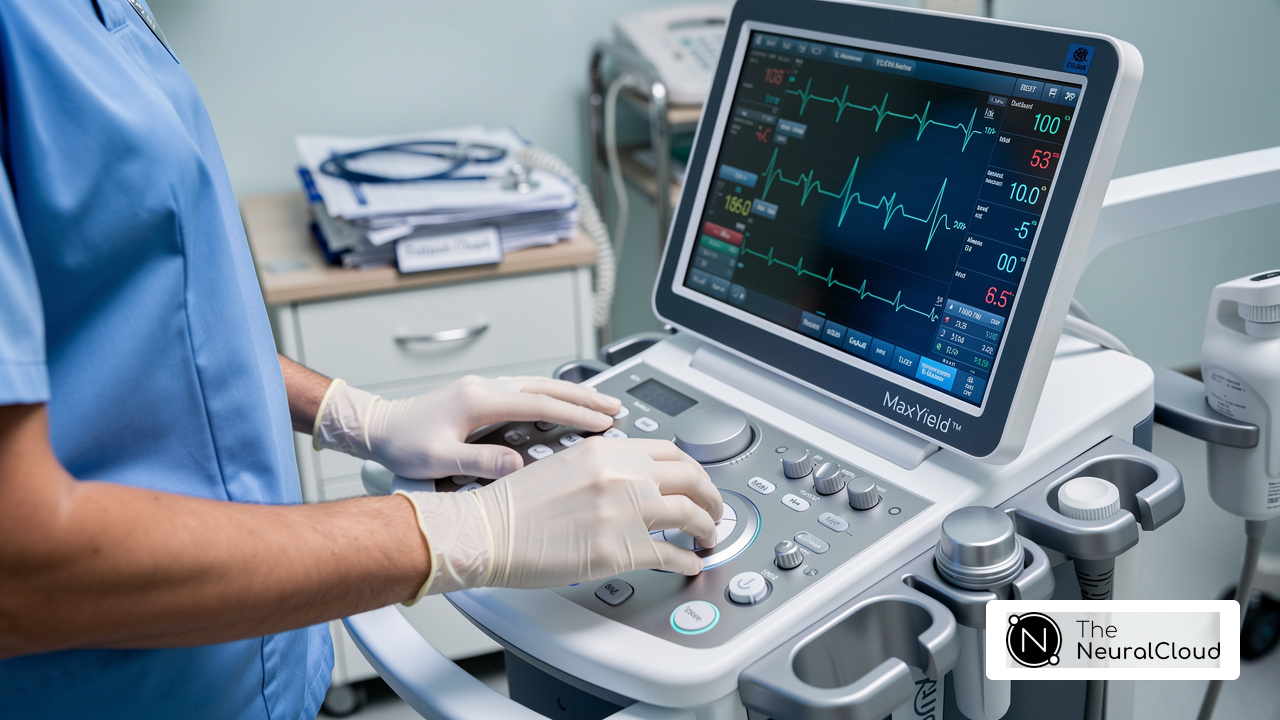
Clinicians often struggle with noisy ECG signals that obscure critical data needed for accurate diagnosis. Neural Cloud Solutions' MaxYield platform transforms ECG analysis with advanced AI algorithms. This significantly enhances the understanding of anterior vs posterior stemi ecg in relation to heart attacks. By effectively isolating and cleaning noisy signals, MaxYield delivers high-fidelity cardiac data, enabling clinicians to distinguish between myocardial infarctions by analyzing anterior vs posterior stemi ecg with greater accuracy. MaxYield can process raw ECG recordings from various devices, helping healthcare providers get precise readings without needing major hardware changes, making it an essential asset in emergency situations.
Recent advancements in AI algorithms have demonstrated a marked impact on ECG interpretation accuracy. For example, studies show that AI-driven ECG analysis has lowered false positive activation rates from 42% to only 8%, highlighting its effectiveness in improving heart attack detection. This improvement in accuracy directly translates to better patient outcomes and more effective treatment plans, as 601 out of 1,032 patients analyzed had confirmed heart attacks, underscoring the importance of reliable data in clinical decision-making.
Real-world applications of MaxYield illustrate its role in improving ECG interpretation. The platform's integration into existing workflows allows for seamless data processing, which is vital for timely interventions in acute care settings. Cardiologists have highlighted the importance of high-fidelity cardiac data in diagnosing ST-Elevation Myocardial Infarction, mentioning that the clarity offered by MaxYield can greatly impact patient outcomes. As healthcare evolves, AI's role in ECG interpretation will be key to improving diagnostic accuracy and efficiency.

ECG Findings in Anterior STEMI: Key Characteristics and Interpretation
Recognizing the signs of anterior vs posterior stemi ecg is essential for timely intervention and improved patient outcomes. This condition, in the context of anterior vs posterior stemi ecg, is characterized by ST-segment elevation in leads V1 to V4, with specific thresholds of:
- ≥2 mm in at least two contiguous leads for men
- ≥1.5 mm in V2 and V3 leads for women
You’ll often see reciprocal ST-segment depression in the inferior leads (II, III, aVF) alongside this elevation. Clinicians need to watch for Q waves, which can develop as the infarction progresses and indicate myocardial necrosis. The presence of Q waves signifies a more advanced stage of infarction and is associated with poorer outcomes.
Swift identification and management of heart attacks, particularly in relation to anterior vs posterior stemi ecg, are crucial, as prompt reperfusion therapy can greatly reduce morbidity and mortality. Moreover, clinicians should recognize the possibility of right ventricular infarction occurring alongside front wall myocardial infarction, which can complicate management.
Understanding these ECG characteristics, along with the integration of AI-powered detection tools, is vital for effective diagnosis and treatment decisions, reinforcing the need for a swift response in acute care settings. Incorporating advanced detection tools can significantly enhance the accuracy of ECG interpretations, ultimately saving lives.

ECG Findings in Posterior STEMI: Distinct Features and Diagnostic Challenges
Diagnosing recurrent STEMI presents unique challenges due to the limitations of standard 12-lead ECGs. The back myocardium is not directly visualized, requiring clinicians to look for reciprocal changes in the anterior leads, particularly V1 to V3, where ST-segment depression may suggest underlying rear ischemia. Additionally, ST-segment elevation in back leads (V7-V9) is crucial for confirming the diagnosis. Recognizing these indirect signs is essential, as overlooking them can lead to significant delays in treatment.
Neural Cloud Solutions' MaxYield™ platform improves diagnosis by using advanced noise filtering and recognizing distinct ECG waves. By rapidly isolating ECG waves from recordings affected by baseline wander, movement, and muscle artifact, MaxYield™ ensures that critical data is accurately identified and labeled. This technology boosts ECG analysis efficiency and addresses the physiological variability and signal artifacts that complicate interpreting rear heart attacks.
Ultimately, by improving the accuracy of ECG analysis, MaxYield™ empowers clinicians to make quicker, more informed decisions in critical situations.

Clinical Presentation Variations: Anterior vs Posterior STEMI
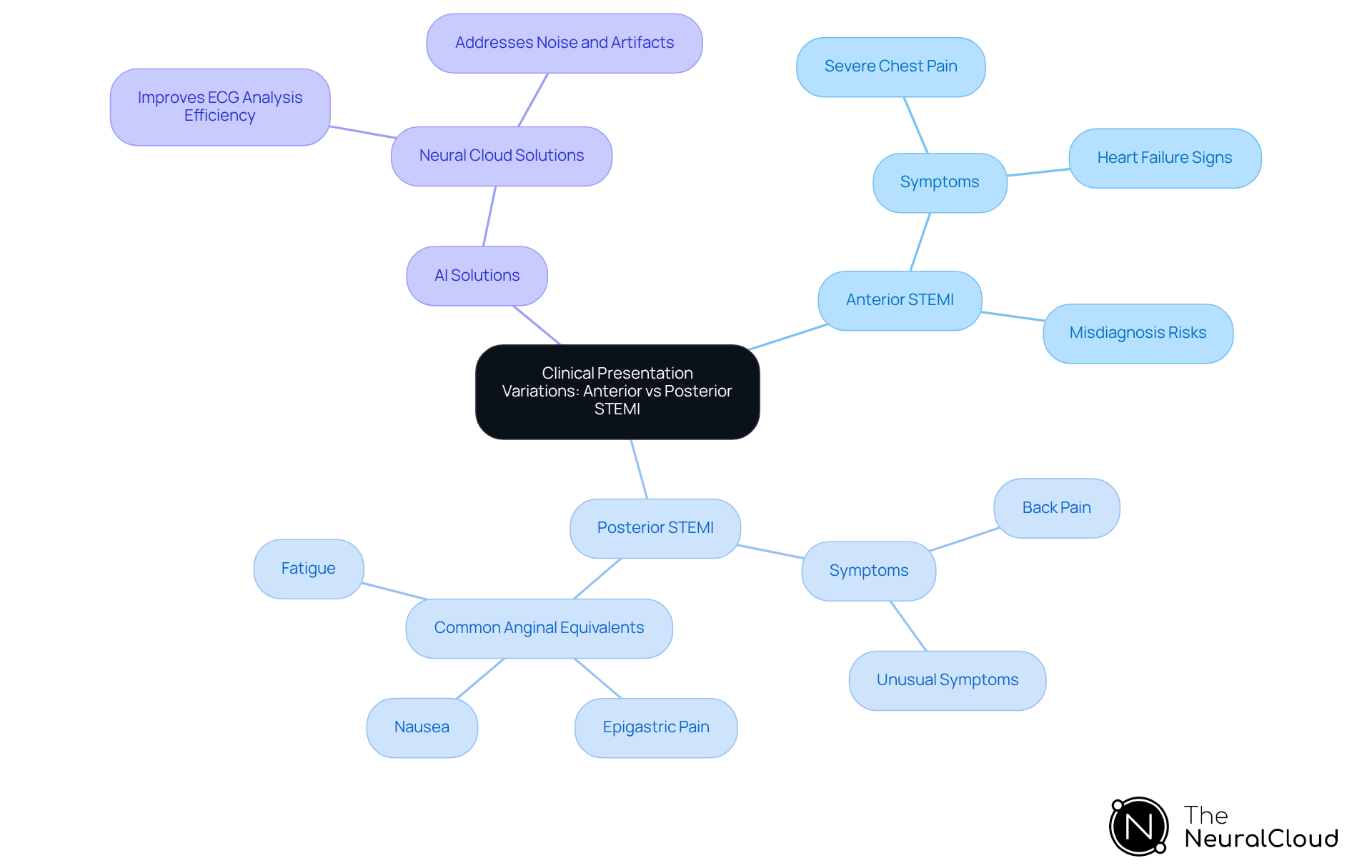
Recognizing the varied presentations of myocardial infarction is crucial for effective diagnosis and treatment. Patients with anterior ST-elevation myocardial infarction can be analyzed through anterior vs posterior stemi ecg, often experiencing severe chest pain. They may also show signs of heart failure due to the larger area of the heart affected. In contrast, individuals with back-related heart attacks may experience unusual symptoms, such as back pain or discomfort, which can lead to misdiagnosis. Common anginal equivalents include:
- Nausea
- Epigastric pain
- Fatigue
Particularly among elderly, diabetic, and female patients. Misdiagnosis can lead to delayed treatment, which is critical in acute myocardial infarction cases. This variability shows why it's vital to stay alert for signs of acute myocardial infarction. Clinicians must be vigilant in recognizing these atypical presentations to ensure timely and appropriate interventions.
To enhance the efficiency and accuracy of ECG analysis, Neural Cloud Solutions improves ECG analysis efficiency and accuracy through its Continuous Learning Model. This model evolves with each use, maximizing diagnostic yield. This AI-driven automation addresses challenges in ECG analysis, such as noise and signal artifacts, ensuring that clinicians can rely on crisp, filtered ECG signals for accurate interpretation. Studies indicate that patients presenting with chest pain should receive an ECG within 10 minutes of arrival at the Emergency Department to facilitate swift diagnosis and treatment. By understanding these atypical symptoms, healthcare professionals can significantly improve patient outcomes.
Diagnostic Testing Approaches for Anterior and Posterior STEMI
Diagnostic testing for ST-elevation myocardial infarction often begins with a 12-lead ECG, a critical tool for identifying heart attack indicators. In cases where back myocardial infarction is suspected, additional leads (V7-V9) may be employed to confirm the diagnosis, as they provide essential insights into the heart's rear wall. Troponin is recognized as the primary biomarker for diagnosing myocardial infarction, released into the bloodstream during an infarction, making it vital for assessing myocardial injury. It's alarming that half of heart attacks are misdiagnosed at first contact, highlighting the urgent need for reliable diagnostic tools.
The integration of advanced AI tools like Neural Cloud Solutions' MaxYield™ enhances diagnostic accuracy. It reduces noise and improves signal clarity, leading to more reliable ECG interpretations. This noise filtering, combined with P, QRS, and T Wave highlighting, streamlines workflow and automates repetitive tasks, allowing for the processing of more data in less time. Dr. Alan Rabinowitz emphasizes that precision in cardiac biomarkers is vital for assessing myocardial injury, and technological advancements are key to enhancing our diagnostic capabilities.
With the right tools, healthcare professionals can significantly enhance their diagnostic accuracy, ultimately improving patient outcomes.

Evolution of ECG Changes: Tracking Anterior vs Posterior STEMI Progression
The progression of ECG alterations in myocardial infarction presents significant challenges for healthcare professionals. In front wall myocardial infarction, changes typically begin with hyperacute T waves, advancing to ST-segment elevation and eventually leading to the formation of Q waves. Conversely, back myocardial infarction typically begins with ST-segment depression in the front leads, which may evolve into ST elevation in the back leads as the condition progresses. This progression highlights the critical need for continuous ECG monitoring, as recognizing these changes promptly can greatly influence patient outcomes.
Cardiologists stress the importance of tracking these changes over time. Doing so is essential for assessing the timing of the infarction and determining the urgency of intervention. Recognizing these changes in real-time can be challenging, yet it is crucial for effective patient management. Recent studies show that grasping the dynamic nature of these ECG changes is essential for enhancing diagnostic accuracy and treatment approaches in managing acute coronary syndrome.

Reciprocal Changes in ECG: Implications for Anterior and Posterior STEMI
Diagnosing heart attacks requires keen attention to subtle changes in ECG readings. Mutual changes play a crucial role in diagnosing heart attacks, particularly in the context of anterior vs posterior STEMI ECG. In instances of front wall myocardial infarction, the differentiation of ST-segment depression in the inferior leads (II, III, aVF) and ST-segment elevation in the front leads (V1-V4) is essential for analyzing the anterior vs posterior STEMI ECG. This pattern indicates a blockage in the left descending coronary artery, crucial for timely intervention. Conversely, posterior myocardial infarction may present with ST-segment depression in the anterior leads (V1-V3), which can be assessed through the anterior vs posterior STEMI ECG, signaling underlying posterior ischemia due to occlusion of the posterior descending coronary artery. Without recognizing these changes, clinicians may miss critical signs of heart attacks, which can delay treatment.
Studies show that it's important to note that 70% of inferior STEMIs are linked to right coronary artery occlusion, highlighting the significance of monitoring inferior lead changes. Additionally, the Sgarbossa criteria indicate that concordant ST elevation exceeding 1mm in leads with a positive QRS complex is significant in diagnosing acute myocardial infarction, emphasizing the necessity for clinicians to be attentive in interpreting these ECG results.
With the integration of Neural Cloud Solutions' MaxYield™, clinicians can leverage cutting-edge AI technology to transform lengthy and noisy ECG recordings into clean, crisp signals, enhancing the precision and speed of ambulatory ECG waveform analysis. Testimonials from healthcare professionals underscore the effectiveness of MaxYield™ in improving diagnostic accuracy. As Dr. Navdeep Sekhon remarks, "It is crucial to recognize that some of these patients with a new LBBB will have an acute coronary occlusion," highlighting the urgency of prompt intervention in heart attack cases, as captured in the phrase 'time is muscle.' Recognizing these patterns can significantly impact survival rates for patients facing heart attacks.

STEMI Territories: Anatomical Considerations in ECG Interpretation
Accurate ECG analysis is crucial, yet many clinicians face challenges in interpreting the signs of myocardial infarctions. MaxYield™, a patent-pending solution from Neural Cloud Solutions, addresses these challenges effectively. The front myocardial infarction primarily involves the left anterior descending artery, impacting the front wall of the heart, while rear myocardial infarction is typically associated with the right coronary artery, affecting the back wall. This distinction allows clinicians to correlate specific ECG findings with the corresponding ischemic areas when considering anterior vs posterior stemi ecg. For instance, the anterior vs posterior stemi ecg indicates that ST-segment elevation in leads V1 to V3 may suggest front wall involvement, while changes in leads II, III, and aVF can indicate posterior wall ischemia.
Research indicates that anterior myocardial infarction often results in more extensive myocardial damage due to the larger area supplied by the left anterior descending artery, which significantly influences treatment strategies. Moreover, understanding the correlation between ECG findings and ischemic areas enhances the ability to make timely and effective clinical decisions, ultimately improving patient outcomes. MaxYield™ focuses on analyzing ECG waveforms beat by beat, giving clinicians immediate access to clearly labeled PQRST datasets that are crucial for research and diagnostics in cardiac health. Its capability to handle extensive recordings with significant noise ensures that clinicians receive a clear, 'neuralized' ECG signal, facilitating thorough post-processing essential for evaluating ECGs for medical conditions or overall heart performance.
As Navdeep Sekhon, MD, emphasizes, maintaining a high index of suspicion is vital to avoid missing acute coronary artery occlusions. Additionally, clinicians must be aware of potential complications of myocardial infarction, such as cardiogenic shock and severe heart failure, which underscore the importance of accurate ECG interpretation. A 12-lead ECG is crucial for assessing patients with suspected heart attacks, and using the TIMI risk score can further inform treatment strategies by evaluating risk factors related to the condition. By leveraging advanced tools like MaxYield™, healthcare professionals can significantly improve their diagnostic capabilities and patient care.

Treatment Strategies for Anterior vs Posterior STEMI Based on ECG Interpretation
The treatment of heart attacks varies significantly based on the type of myocardial infarction identified through anterior vs posterior STEMI ECG analysis. When analyzing anterior vs posterior STEMI ECG, it is evident that anterior myocardial infarction typically necessitates urgent reperfusion therapy, such as percutaneous coronary intervention (PCI), to promptly restore blood flow to the affected myocardial region. Studies indicate that timely PCI can greatly improve outcomes for patients with acute coronary syndrome, especially in cases of anterior vs posterior STEMI ECG, where the likelihood of complications is increased. In contrast, while back myocardial infarction may also necessitate similar interventions, clinicians must stay alert for potential complications, including right ventricular involvement, which may lead to additional challenges in treatment, especially in the context of anterior vs posterior STEMI ECG.
The integration of advanced diagnostic tools, like Neural Cloud Solutions' MaxYield™, enhances the clarity of ECG data through gold standard methodologies, enabling healthcare professionals to make more informed treatment decisions. By providing high-fidelity cardiac data, MaxYield™ facilitates the identification of critical patterns that influence the urgency and type of intervention required. Cardiologists emphasize that having accurate diagnostic tools is vital in identifying the most effective treatment method, ultimately enhancing patient results in cases involving anterior vs posterior STEMI ECG.

Pearls and Pitfalls in Anterior vs Posterior STEMI ECG Interpretation
Clinicians often encounter significant challenges when interpreting ECGs for anterior vs posterior STEMI ECG in cases of ST elevation myocardial infarction. Identifying reciprocal changes is crucial. These ST depressions on the ECG, located opposite the myocardial infarction, significantly increase the likelihood of a heart attack diagnosis. Additionally, understanding the anatomical implications of ST-segment elevations and depressions is vital for accurate interpretation. Common pitfalls include misinterpreting ST-segment changes due to conditions such as left bundle branch block (LBBB) or pericarditis, which can obscure the true nature of the cardiac event. Research shows that about 39% of ECGs are misinterpreted. Alarmingly, 58% of these misinterpretations result in false-negative diagnoses, underscoring the critical need for clinicians to verify automated interpretations.
Advanced tools, such as Neural Cloud Solutions' MaxYield™, help mitigate these pitfalls. They use sophisticated noise filtering and distinct wave recognition to enhance ECG clarity and accuracy. This AI-driven automation not only improves diagnostic yield over time but also directly addresses the misinterpretation statistics by providing more reliable data. This ultimately results in better patient outcomes and more reliable diagnoses. As Dr. Navdeep Sekhon emphasizes, the absence of reciprocal changes does not preclude the presence of a STEMI, highlighting the importance of careful interpretation in conjunction with the advanced features of MaxYield™.

Conclusion
The MaxYield platform addresses the critical challenges faced in interpreting anterior vs posterior STEMI ECGs, paving the way for improved diagnostic accuracy. By using advanced AI algorithms to filter out noise and clarify critical cardiac data, MaxYield empowers clinicians to make informed decisions in acute care settings. This leads to timely interventions that can save lives.
Throughout the article, we highlighted key insights, including the distinct ECG characteristics of anterior and posterior STEMI, the importance of recognizing reciprocal changes, and the role of advanced diagnostic tools in mitigating common pitfalls associated with ECG interpretation. The integration of MaxYield streamlines the analysis process and reduces misdiagnosis rates, which can lead to delayed treatment and adverse patient outcomes. This underscores the vital connection between accurate ECG readings and effective treatment strategies.
As healthcare evolves, integrating innovative technologies like MaxYield is essential for improving diagnostic capabilities. Clinicians are encouraged to stay informed about advancements in ECG interpretation and adopt these tools in their practice. This ensures they provide the highest standard of care for patients experiencing myocardial infarctions. The pursuit of accuracy in ECG interpretation is not just a technical challenge; it is a commitment to patient safety and improved health outcomes.
Frequently Asked Questions
What is Neural Cloud Solutions' MaxYield platform?
MaxYield is a platform that enhances ECG analysis using advanced AI algorithms to improve the understanding of anterior vs posterior STEMI ECG in relation to heart attacks. It isolates and cleans noisy signals, delivering high-fidelity cardiac data for accurate diagnosis.
How does MaxYield improve ECG analysis for clinicians?
MaxYield processes raw ECG recordings from various devices, allowing healthcare providers to obtain precise readings without requiring major hardware changes. This capability is crucial in emergency situations for timely interventions.
What impact have recent advancements in AI algorithms had on ECG interpretation?
Recent advancements have significantly improved ECG interpretation accuracy, reducing false positive activation rates from 42% to 8%. This enhancement leads to better patient outcomes and more effective treatment plans.
What are the key ECG findings in anterior STEMI?
Anterior STEMI is characterized by ST-segment elevation in leads V1 to V4, with thresholds of ≥2 mm in at least two contiguous leads for men and ≥1.5 mm in V2 and V3 for women. Reciprocal ST-segment depression may also be seen in inferior leads.
Why is swift identification and management of heart attacks important?
Timely identification and management of heart attacks are crucial because prompt reperfusion therapy can significantly reduce morbidity and mortality rates.
What are the distinctive features of posterior STEMI?
Posterior STEMI diagnosis is challenging due to the lack of direct visualization of the back myocardium. Clinicians must look for reciprocal changes in anterior leads (V1 to V3) and ST-segment elevation in back leads (V7-V9) to confirm the diagnosis.
How does MaxYield assist with diagnosing posterior STEMI?
MaxYield improves diagnosis by utilizing advanced noise filtering and recognizing distinct ECG waves, allowing for rapid isolation of ECG waves from recordings affected by artifacts. This ensures critical data is accurately identified for informed decision-making.
What is the significance of recognizing Q waves in ECG analysis?
The presence of Q waves can indicate myocardial necrosis as the infarction progresses and is associated with poorer outcomes, highlighting the importance of timely and accurate ECG interpretation.
List of Sources
- Neural Cloud Solutions' MaxYield: Enhancing Anterior vs Posterior STEMI ECG Analysis
- AI-Based ECG Analysis Significantly Improves STEMI Detection, Reduces False Activations - American College of Cardiology (https://acc.org/latest-in-cardiology/articles/2025/10/24/16/56/tues-554pm-ai-tct-2025)
- AI/ML Innovations Inc. (CVE:AIML) | (https://webdisclosure.com/article/aiml-innovations-inc-cve-aiml-neural-cloud-partners-with-european-digital-cardiac-platform-zbaBa97okBk)
- AIML Hits Key Regulatory Benchmark with 510(k) Filing for MaxYield(TM) Signal Enhancement Platform (https://biospace.com/press-releases/aiml-hits-key-regulatory-benchmark-with-510k-filing-for-maxyieldtm-signal-enhancement-platform)
- ECG Findings in Anterior STEMI: Key Characteristics and Interpretation
- STEMI: ST-segment Elevation Myocardial Infarction - The Cardiology Advisor (https://thecardiologyadvisor.com/ddi/stemi-st-elevation-myocardial-infarction)
- STEMI - Electrocardiogram - M3 Curriculum | SAEM (https://saem.org/about-saem/academies-interest-groups-affiliates2/cdem/for-students/online-education/m3-curriculum/group-electrocardiogram-(ecg)-rhythm-recognition/stemi)
- STEMI ECG Criteria: ST-Elevation Thresholds (https://powerfulmedical.com/blog/stemi-ecg-criteria)
- Clinical Presentation Variations: Anterior vs Posterior STEMI
- STEMI - Electrocardiogram - M3 Curriculum | SAEM (https://saem.org/about-saem/academies-interest-groups-affiliates2/cdem/for-students/online-education/m3-curriculum/group-electrocardiogram-(ecg)-rhythm-recognition/stemi)
- sciencedirect.com (https://sciencedirect.com/science/article/pii/S0196064424012502)
- Diagnostic Testing Approaches for Anterior and Posterior STEMI
- STEMI: ST-segment Elevation Myocardial Infarction - The Cardiology Advisor (https://thecardiologyadvisor.com/ddi/stemi-st-elevation-myocardial-infarction)
- STEMI ECG Criteria: ST-Elevation Thresholds (https://powerfulmedical.com/blog/stemi-ecg-criteria)
- STEMI - Electrocardiogram - M3 Curriculum | SAEM (https://saem.org/about-saem/academies-interest-groups-affiliates2/cdem/for-students/online-education/m3-curriculum/group-electrocardiogram-(ecg)-rhythm-recognition/stemi)
- Evolution of ECG Changes: Tracking Anterior vs Posterior STEMI Progression
- sciencedirect.com (https://sciencedirect.com/science/article/pii/S0196064424012502)
- STEMI - Electrocardiogram - M3 Curriculum | SAEM (https://saem.org/about-saem/academies-interest-groups-affiliates2/cdem/for-students/online-education/m3-curriculum/group-electrocardiogram-(ecg)-rhythm-recognition/stemi)
- Reciprocal Changes in ECG: Implications for Anterior and Posterior STEMI
- STEMI - Electrocardiogram - M3 Curriculum | SAEM (https://saem.org/about-saem/academies-interest-groups-affiliates2/cdem/for-students/online-education/m3-curriculum/group-electrocardiogram-(ecg)-rhythm-recognition/stemi)
- STEMI Territories: Anatomical Considerations in ECG Interpretation
- STEMI: ST-segment Elevation Myocardial Infarction - The Cardiology Advisor (https://thecardiologyadvisor.com/ddi/stemi-st-elevation-myocardial-infarction)
- ECG Case Studies | Interpretation & Answers | Geeky Medics (https://geekymedics.com/ecg-case-studies)
- STEMI ECG Criteria: ST-Elevation Thresholds (https://powerfulmedical.com/blog/stemi-ecg-criteria)
- STEMI - Electrocardiogram - M3 Curriculum | SAEM (https://saem.org/about-saem/academies-interest-groups-affiliates2/cdem/for-students/online-education/m3-curriculum/group-electrocardiogram-(ecg)-rhythm-recognition/stemi)
- Treatment Strategies for Anterior vs Posterior STEMI Based on ECG Interpretation
- ajconline.org (https://ajconline.org/article/S0002-9149(08)01715-3/fulltext)
- Pearls and Pitfalls in Anterior vs Posterior STEMI ECG Interpretation
- STEMI ECG Criteria: ST-Elevation Thresholds (https://powerfulmedical.com/blog/stemi-ecg-criteria)
- pmc.ncbi.nlm.nih.gov (https://pmc.ncbi.nlm.nih.gov/articles/PMC12137353)
- STEMI - Electrocardiogram - M3 Curriculum | SAEM (https://saem.org/about-saem/academies-interest-groups-affiliates2/cdem/for-students/online-education/m3-curriculum/group-electrocardiogram-(ecg)-rhythm-recognition/stemi)